Living
How to drink more water every day: 12 habits that work
How to drink more water without forcing it: how much you really need, simple daily habits, water-rich foods and the signs that you are not drinking enough.
 Bitezine Editorial TeamRankings, reviews & guides 6 min read
 AI generated
Learning how to drink more water is less about willpower and more about making water the easiest drink within reach. Most people do not avoid water on purpose. They simply forget, get busy, or reach for something else out of habit.
Below you will find how much fluid adults actually need, which drinks and foods count, a dozen practical habits that make drinking water automatic, and the signs that tell you whether you are getting enough.
How much water should I drink a day?
There is no single number that fits everyone. The European Food Safety Authority sets adequate total water intakes of about 2.0 litres a day for adult women and 2.5 litres for adult men. That figure covers water from all drinks and food, and food typically supplies around a fifth of it.
In practice, the UK's NHS suggests aiming for six to eight cups or glasses of fluid a day. You need more when it is hot, when you exercise, when you are ill with a fever or diarrhoea, and when you are pregnant or breastfeeding. People with heart or kidney conditions may be told to limit fluids, so follow medical advice if that applies to you.
What counts towards your daily water intake?
Plain water is the best everyday choice because it has no sugar and no calories. Still, it is not the only thing that counts. Lower-fat milk, herbal and regular tea, coffee and sugar-free drinks all contribute to your fluid intake.
Caffeine has a mild diuretic effect, but tea and coffee still leave you with a net gain of fluid for people who drink them regularly. Fruit juice and smoothies count too, but they are high in free sugars, so the NHS recommends keeping them to a small glass a day. Alcohol does not help hydration and is best not counted.
Most people do not avoid water on purpose; they simply forget, so make it the easiest drink within reach.
12 habits to help you drink more water
The trick is to link drinking water to things you already do, so you stop relying on memory. Pick three or four of these to start with rather than all of them at once.
- Drink a glass of water as soon as you get up.
- Keep a refillable bottle on your desk, in your bag and in the car.
- Have a glass of water with every meal and snack.
- Drink a glass before each cup of coffee or tea.
- Refill your bottle every time you return to your desk from a break.
- Use a bottle with volume markings so you can see progress through the day.
- Set a few reminders on your phone for mid-morning and mid-afternoon.
- Keep a jug of chilled water in the fridge at home.
- Order tap water alongside any other drink when eating out.
- Use a straw if you find you sip more that way.
- Drink before, during and after exercise.
- Swap one sugary drink a day for sparkling or flavoured water.
How to drink more water if you don't like the taste
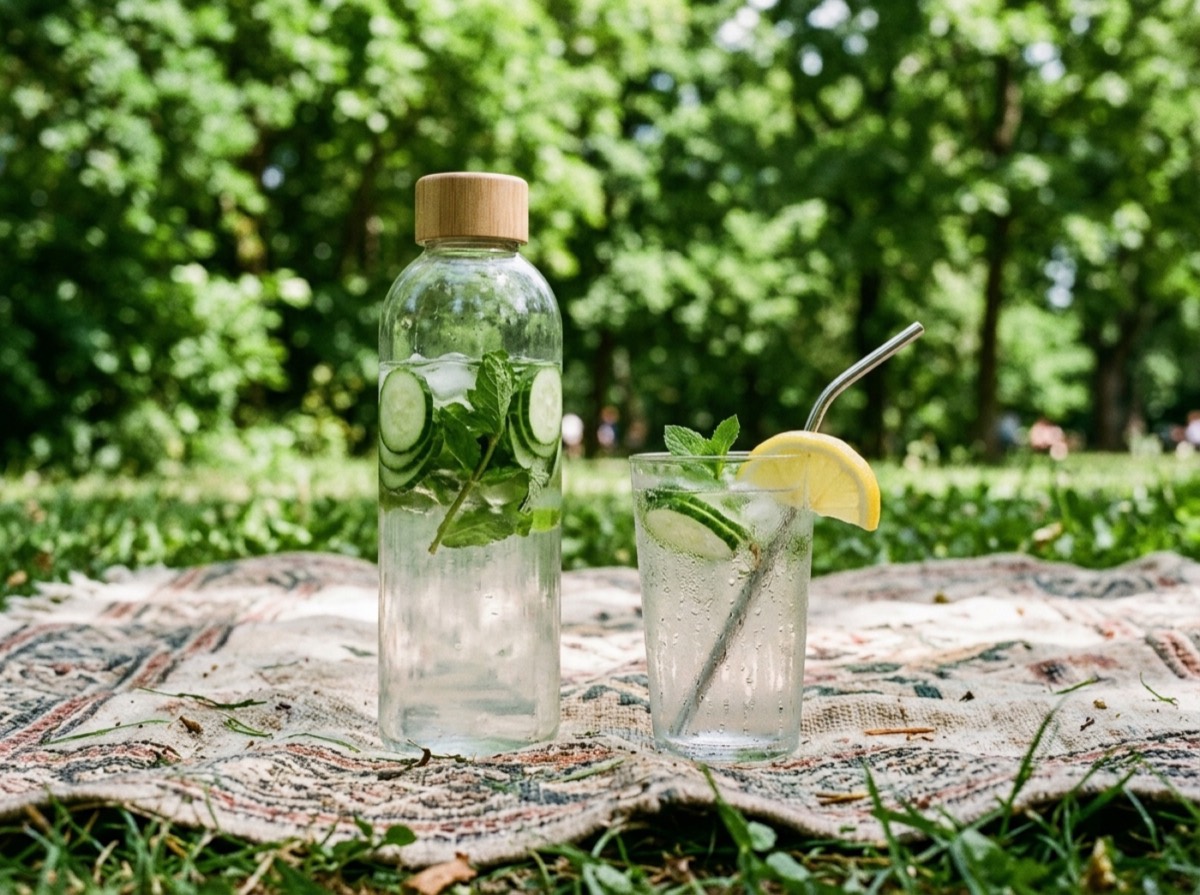
Plenty of people find plain water boring. Adding natural flavour is an easy fix. Try slices of lemon, lime, orange or cucumber, a handful of crushed berries, fresh mint or basil, or a thin slice of ginger. Let the jug sit in the fridge for an hour or two for a stronger taste.
Temperature matters too. Some people drink much more when water is ice-cold, others prefer it at room temperature or warm with a slice of lemon. Sparkling water can feel more satisfying if you are cutting back on fizzy drinks. If your tap water tastes of chlorine, leaving it in an open jug in the fridge or using a filter jug often helps.
Eat your water: foods with high water content
Food is an underrated source of fluid. Many fruits and vegetables are more than 85 percent water, so eating more of them helps you stay hydrated and adds fibre and vitamins at the same time. Soups, stews, yoghurt and porridge made with milk or water also contribute.
- Cucumber, lettuce and celery
- Tomatoes and courgettes
- Watermelon, melon and strawberries
- Oranges and grapefruit
- Broth-based soups
Signs you are not drinking enough water
Your urine is the simplest guide. Pale straw-coloured urine usually means you are well hydrated, while dark yellow urine with a strong smell suggests you need more fluid. Other common signs of mild dehydration include feeling thirsty, a dry mouth or lips, tiredness, headaches, feeling light-headed and passing urine less often.
Thirst becomes a less reliable signal with age, so older adults may need to drink at regular times rather than waiting until they feel thirsty. Babies, young children and people who are unwell with vomiting or diarrhoea can become dehydrated quickly and need closer attention. Seek medical help for severe symptoms such as confusion, a rapid heartbeat or not passing urine for many hours.
Can you drink too much water?
It is rare, but yes. Drinking very large amounts in a short time can dilute the sodium in your blood, a condition called hyponatraemia. It mostly affects endurance athletes who drink heavily over long events without replacing salt, or people taking part in drinking challenges.
For everyday life, spread your drinks across the day and let thirst and urine colour guide you. There is no need to force down litres at once.
Benefits of drinking more water
Water helps regulate body temperature, carries nutrients, cushions joints and helps the kidneys remove waste. Even mild dehydration can leave you tired, less focused and more prone to headaches. Staying hydrated also helps prevent constipation and lowers the risk of some kidney stones.
Swapping sugary drinks for water is one of the simplest ways to cut sugar and calories from your diet, which is good news for your teeth and your weight.
Frequently asked questions
How much water should I drink a day?
+
Most healthy adults do well with about six to eight glasses of fluid a day, plus the water in their food. European guidance puts total daily water intake at about 2 litres for women and 2.5 litres for men. You need more in hot weather and when you exercise.
Does coffee count towards water intake?
+
Yes. Tea and coffee contain mostly water and count towards your daily fluid intake, especially if you drink them regularly. Keep caffeine within sensible limits and balance hot drinks with plain water.
What is the easiest way to drink more water?
+
Keep a refillable bottle within reach all day and tie drinking to routines you already have, such as waking up, meals and breaks. A glass of water with each meal alone adds several glasses a day.
How can I tell if I am dehydrated?
+
Check your urine colour: pale straw is good, dark yellow means you need more fluid. Thirst, a dry mouth, headaches and tiredness are other common signs of mild dehydration.
Is it bad to drink a lot of water at once?
+
Drinking very large amounts quickly can lower blood sodium to dangerous levels, although this is uncommon. Spread your drinks through the day instead of downing large volumes in one go.
Is sparkling water as hydrating as still water?
+
Yes, plain sparkling water hydrates just as well as still water. Check the label on flavoured versions, since some contain added sugar or sweeteners.
If you want to drink more water, make it the default: a bottle on the desk, a glass with every meal and a jug in the fridge. Add flavour if plain water bores you, eat plenty of water-rich foods and check your urine colour now and then. Within a couple of weeks, the habit tends to run itself.
How we research: Guides are written from established sources and checked for accuracy. They are general information, not professional advice.
Written by
Bitezine Editorial Team
Rankings, reviews & guides
Our editors research every piece from makers’ documentation, independent tests and owner reports, and update it when products change.