Ranked · Home & Living
Best houseplants for beginners in 2026
Ten hard-to-kill houseplants for beginners, with light needs, watering schedules and pet safety for each, so your first plants actually survive.
 Bitezine Editorial TeamRankings, reviews & guides 9 min read
 AI generated
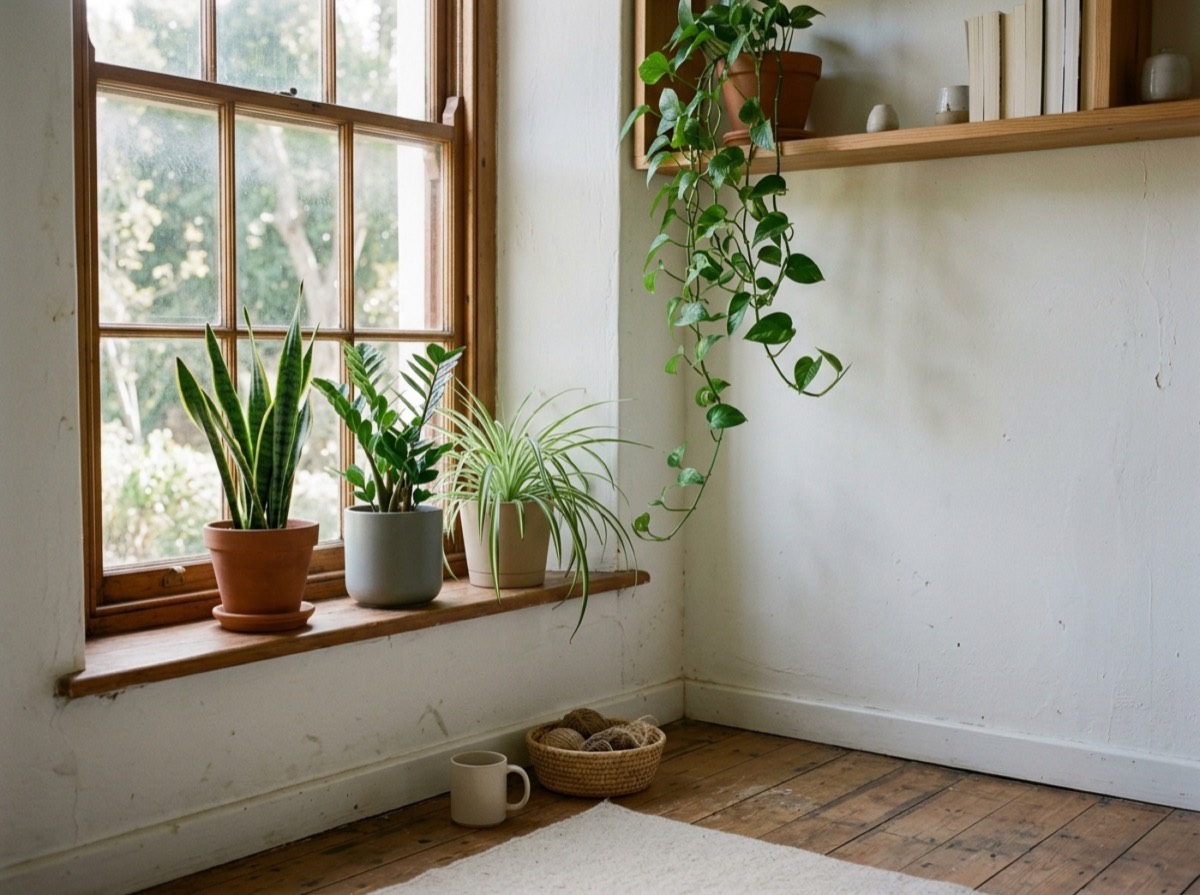
The best houseplants for beginners tolerate the mistakes new plant owners make most often: forgetting to water, overwatering, and putting a plant in the wrong light. Each plant below can recover from a rough week, grows well in an ordinary home, and is widely sold at garden centres and supermarkets.
We compared current beginner plant guides from nurseries and gardening sites, then checked care needs against horticultural references and pet toxicity against the ASPCA plant list. Plants were ranked on how forgiving they are, how well they cope with low light, and how easy they are to find. Where a plant is toxic to cats or dogs we say so clearly.
At a glance
- 1Snake plant (Dracaena trifasciata)
- 2Pothos (Epipremnum aureum)
- 3ZZ plant (Zamioculcas zamiifolia)
- 4Spider plant (Chlorophytum comosum)
- 5Cast iron plant (Aspidistra elatior)
- 6Heartleaf philodendron (Philodendron hederaceum)
- 7Peace lily (Spathiphyllum)
- 8Parlor palm (Chamaedorea elegans)
- 9Chinese evergreen (Aglaonema)
- 10Rubber plant (Ficus elastica)
#1 · Best for Forgetful waterers
Snake plant (Dracaena trifasciata)
The toughest plant for beginners
The snake plant has stiff, upright leaves that store water, so it can go several weeks without a drink. It tolerates low light but grows faster in bright, indirect light. Its narrow shape suits corners and bedrooms where floor space is tight.
- Survives weeks without watering
- Copes with low light
- Upright shape suits tight spaces
- Rarely troubled by pests
- Light
- Low to bright indirect
- Watering
- Every 2–4 weeks, when dry
- Pet-safe
- No, toxic to cats and dogs
#2 · Best for Shelves and hanging planters
Pothos (Epipremnum aureum)
Fast, forgiving trailing vine
Pothos grows long trailing stems that look good on shelves or in hanging pots, and it roots easily in water if you want more plants. Its leaves droop when it needs water and recover quickly, which makes it easy to read. Varieties such as Golden, Marble Queen and Neon offer different leaf colours.
- Droops visibly when thirsty
- Easy to propagate in water
- Trails or climbs a moss pole
- Several colour varieties
- Light
- Low to bright indirect
- Watering
- Weekly, when top soil is dry
- Pet-safe
- No, toxic to cats and dogs
#3 · Best for Dim rooms and offices
ZZ plant (Zamioculcas zamiifolia)
Glossy, drought-proof and low light
The ZZ plant grows from thick underground rhizomes that hold water, letting it handle long dry spells. Its glossy leaves stay neat with almost no attention, and it is one of the best plants for offices and dim rooms. Overwatering is the only common way to harm it.
- Stores water in underground rhizomes
- Handles dim rooms and offices
- Glossy leaves need little cleaning
- Slow, tidy growth
- Light
- Low to bright indirect
- Watering
- Every 2–3 weeks, when fully dry
- Pet-safe
- No, toxic to cats and dogs
#4 · Best for Homes with cats and dogs
Spider plant (Chlorophytum comosum)
The best pet-safe starter plant
Spider plants produce arching striped leaves and small plantlets on long stems that can be potted up to make new plants. They adapt to a wide range of light and temperatures and are non-toxic to cats and dogs. Brown leaf tips are common and usually cosmetic.
- Non-toxic to cats and dogs
- Produces baby plants to share
- Adapts to most indoor conditions
- Looks good in hanging baskets
- Light
- Medium to bright indirect
- Watering
- Weekly, when top soil is dry
- Pet-safe
- Yes
#5 · Best for Dark hallways and corners
Cast iron plant (Aspidistra elatior)
Thrives where others give up
The cast iron plant earned its name by surviving dark Victorian hallways, and it still handles deep shade, cool rooms and irregular watering. Growth is slow, so it keeps its shape for years. It is also safe for pets.
- Tolerates deep shade
- Handles cool rooms and drafts
- Non-toxic to cats and dogs
- Very slow, steady growth
- Light
- Low to medium indirect
- Watering
- Every 1–2 weeks, when top soil is dry
- Pet-safe
- Yes
#6 · Best for Bookshelves and high spots
Heartleaf philodendron (Philodendron hederaceum)
Soft trailing leaves, easy care
This philodendron has heart-shaped leaves on trailing stems and needs much the same care as pothos. It handles medium light well and grows steadily without fuss. Stem cuttings root easily in water or soil.
- Heart-shaped trailing leaves
- Roots easily from cuttings
- Steady growth in medium light
- Brasil variety adds lime stripes
- Light
- Medium to bright indirect
- Watering
- Weekly, when top soil is dry
- Pet-safe
- No, toxic to cats and dogs
#7 · Best for People who want flowers
Peace lily (Spathiphyllum)
Flowers indoors and shows thirst
The peace lily is one of the few easy houseplants that flowers reliably indoors, producing white blooms in moderate light. It wilts dramatically when dry and recovers within hours of watering, which helps beginners learn its rhythm. It prefers evenly moist soil more than most plants on this list.
- White flowers in moderate light
- Wilts clearly when it needs water
- Tolerates lower light (fewer flowers)
- Dark green glossy foliage
- Light
- Low to medium indirect
- Watering
- Weekly, keep lightly moist
- Pet-safe
- No, mildly toxic to cats and dogs
#8 · Best for Pet owners wanting a palm
Parlor palm (Chamaedorea elegans)
A pet-safe palm for shade
The parlor palm brings a tropical look to rooms without strong sun, and it has been a popular indoor palm since the 1800s. It grows slowly, stays compact for years and is non-toxic to pets. Keep it away from heaters, as dry air can brown its fronds.
- Tolerates medium to low light
- Compact, slow-growing palm
- Non-toxic to cats and dogs
- Soft, feathery fronds
- Light
- Low to medium indirect
- Watering
- Every 1–2 weeks, when top soil is dry
- Pet-safe
- Yes
#9 · Best for Adding colour to low light
Chinese evergreen (Aglaonema)
Colourful leaves without the fuss
Chinese evergreens offer patterned leaves in green, silver, pink and red while staying easy to care for. Green varieties handle low light best, while colourful types need brighter spots to keep their colour. They dislike cold, so keep them above about 15°C (60°F).
- Patterned leaves in many colours
- Green types tolerate low light
- Compact, bushy growth
- Tolerates occasional dry soil
- Light
- Low to bright indirect
- Watering
- Every 1–2 weeks, when top soil is dry
- Pet-safe
- No, toxic to cats and dogs
#10 · Best for A first large plant
Rubber plant (Ficus elastica)
An easy indoor tree
The rubber plant grows large, glossy leaves on an upright stem and can become a small indoor tree over a few years. It is far less fussy than its relative the fiddle-leaf fig, though it needs bright, indirect light to grow well. Wipe the leaves occasionally to keep them shiny and dust-free.
- Grows into a statement indoor tree
- Large glossy leaves
- Less demanding than fiddle-leaf fig
- Burgundy and variegated varieties
- Light
- Bright indirect
- Watering
- Every 1–2 weeks, when top soil is dry
- Pet-safe
- No, toxic to cats and dogs
How to choose
Match the plant to your light first, because it is the one thing you cannot easily change. Stand where the plant will go at midday: if you can read comfortably without a lamp, you have at least medium light. Low light indoor plants such as the ZZ plant, snake plant and cast iron plant cope with north-facing rooms or spots a few metres from a window, while the rubber plant and spider plant grow faster in bright, indirect light.
Next, be honest about your habits. If you travel or forget, choose plants that don't need much water, like the ZZ plant or snake plant. If you tend to overwater, avoid those two and pick something that shows thirst clearly, such as a peace lily or pothos, which droop when dry and perk up after a drink. If you have cats or dogs, stick to pet safe houseplants like the spider plant, cast iron plant and parlor palm, or keep toxic plants well out of reach. Always use a pot with a drainage hole.
Frequently asked questions
What is the easiest houseplant to keep alive?
+
The ZZ plant and snake plant are generally considered the hardest to kill. Both store water in their leaves or roots, tolerate low light, and only need watering every few weeks. The main way to kill them is by overwatering.
Which houseplants are safe for cats and dogs?
+
Spider plants, cast iron plants and parlor palms are all listed as non-toxic to cats and dogs by the ASPCA. Pothos, snake plants, ZZ plants, peace lilies, philodendrons, Chinese evergreens and rubber plants are toxic if chewed and should be kept out of reach.
What are the best plants for low light?
+
The ZZ plant, snake plant, cast iron plant and pothos all cope with low light, although they grow more slowly there. No houseplant thrives in a room without any natural light, so a spot within a few metres of a window is still best.
How often should I water houseplants?
+
Water when the soil needs it rather than on a fixed schedule. For most beginner plants, that means when the top few centimetres of soil are dry. Succulent-like plants such as the ZZ plant and snake plant should dry out almost completely, while peace lilies prefer evenly moist soil.
Why are the leaves on my houseplant turning yellow?
+
Overwatering is the most common cause, especially if the soil stays wet and the pot has no drainage hole. Yellowing can also come from too little light or the natural loss of older leaves. Check the soil moisture before adding more water.
Do houseplants really purify the air?
+
Not in a meaningful way at normal home densities. The well-known NASA study was done in small sealed chambers, and later research found that ordinary ventilation has a much larger effect. Houseplants are still worth having for their looks and the enjoyment of caring for them.
Is a peace lily a real lily?
+
No. The peace lily (Spathiphyllum) is not a true lily, so it does not cause the kidney failure in cats that Lilium species do. It does contain calcium oxalate crystals, which can irritate the mouth and stomach of pets that chew it.
For a first plant, a snake plant or pothos is hard to beat, and pet owners should start with a spider plant. Water only when the soil tells you to, give each plant the light it prefers, and repot only when roots fill the pot. Get those basics right with one or two low maintenance indoor plants and you will have the confidence to build a larger collection.
How we research: We compare each product on the same criteria, using makers’ documentation, independent reviews and owner feedback, and re-check the list when products change.
Written by
Bitezine Editorial Team
Rankings, reviews & guides
Our editors research every piece from makers’ documentation, independent tests and owner reports, and update it when products change.