Tech
What is 5G? A clear guide to the fifth-generation mobile network
What is 5G and how is it different from 4G? A plain explanation of 5G frequencies, speeds, latency, standalone networks, coverage and safety.
 Bitezine Editorial TeamRankings, reviews & guides 6 min read
 AI generated
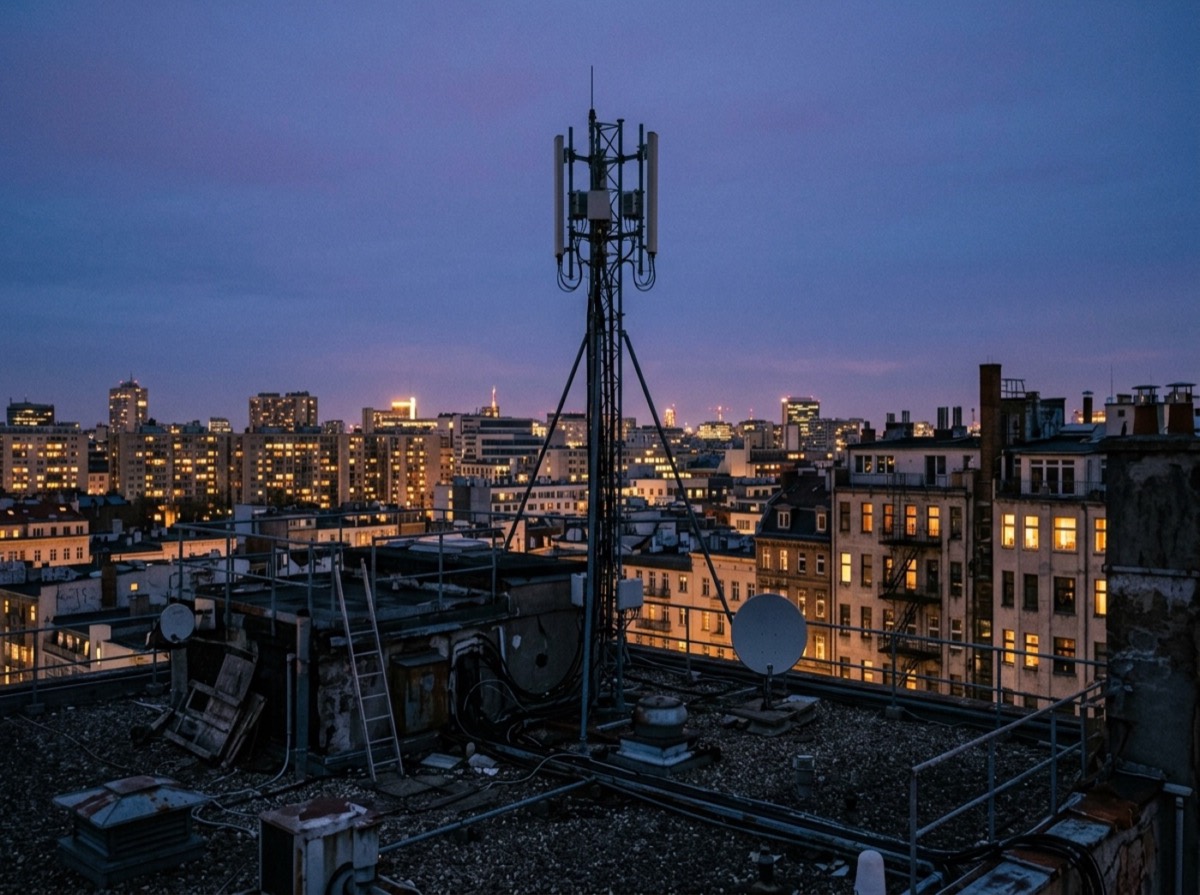
What is 5G? It is the fifth generation of mobile network technology, the successor to 4G LTE, designed to carry more data, respond faster and connect far more devices at once. Its official radio standard is called 5G New Radio, or 5G NR, developed by the industry body 3GPP, with the first full specification published in 2018 and commercial networks launching from late 2018 onwards.
For most people, 5G shows up as a small icon on the phone and, depending on location, noticeably faster downloads. Behind that icon, though, sit very different kinds of networks. Understanding them explains why 5G sometimes feels transformative and sometimes barely different from 4G.
How does 5G work?
Like earlier generations, 5G sends data between your device and nearby radio masts, known as cells, which connect to the operator's core network and the internet. What changed is the radio design and the network behind it.
5G uses a more flexible radio interface that can adjust to different frequencies and needs. It makes heavy use of massive MIMO, meaning many small antennas on each mast that aim signals toward individual users, a technique called beamforming. Together these allow more users and more data in the same space.
The core network is also redesigned. It runs largely as software, which lets operators create separate virtual networks, called network slices, with different performance for different uses.
5G frequency bands explained
The 5G standard defines two broad frequency ranges. Frequency Range 1 covers roughly 410 MHz to 7.125 GHz and includes the low and mid bands used by most networks. Frequency Range 2 covers roughly 24.25 GHz to 71 GHz and is known as millimetre wave.
Frequency makes a big practical difference. Lower frequencies travel far and pass through walls well but carry less data. Higher frequencies carry huge amounts of data but reach only short distances and are easily blocked by buildings, trees and even hands.
- Low band (below 1 GHz): wide coverage, good indoors, speeds similar to good 4G
- Mid band (roughly 1 to 7 GHz): the main capacity layer, a balance of range and speed
- Millimetre wave (above 24 GHz): very high speeds over short distances, used in dense spots such as stadiums and city centres
The 5G icon tells you which network you are on, not how good the connection is.
5G vs 4G: what is actually different?
The international targets for 5G, set by the International Telecommunication Union under the name IMT-2020, include peak download speeds of up to 20 gigabits per second, latency as low as one millisecond for critical uses and support for up to a million devices per square kilometre. Those are design goals, not what you will see on a phone.
Real-world differences are more modest but still meaningful. On a good mid-band connection, downloads are often several times faster than typical 4G, and networks stay usable in crowded places where 4G slows down. Latency, the delay before data starts moving, is lower, which helps with video calls and online gaming.
- Speed: higher capacity and faster peak downloads
- Latency: shorter response times, especially on standalone networks
- Capacity: many more simultaneous users and devices
- Flexibility: network slicing for different services
What is 5G standalone and non-standalone?
Early 5G networks were built as non-standalone, or NSA. They add 5G radio to an existing 4G network, which still handles the control signalling. That made rollout fast and cheap, but it limits the benefits, especially for latency and new features.
Standalone 5G, or SA, uses a new 5G core network for everything, both signalling and data. It unlocks lower latency, better battery efficiency in some cases, network slicing and more reliable connections. Many operators are moving toward standalone, and some phones and plans show which type you are using.
Why does my phone show 5G but still feel slow?
The 5G icon only tells you that your phone is connected to a 5G cell, not how good the connection is. A low-band 5G signal may be no faster than 4G. A weak signal indoors, a crowded cell, or operator speed limits on your plan can all hold you back.
Some operators have also used spectrum sharing, where 4G and 5G run on the same frequencies, which can produce 5G labels without a big speed gain. If speeds disappoint, check coverage maps for mid-band 5G, test at different spots, and compare against Wi-Fi.
Do you need a 5G phone?
Most new smartphones support 5G, so the question usually answers itself when you upgrade. A 5G phone also needs a plan that includes 5G access, which many operators now provide as standard.
4G networks will keep working for years in most countries, so there is no need to replace a working phone just for 5G. Older 2G and 3G networks, on the other hand, are being switched off in many places, which matters more for very old phones.
5G home internet and other uses
Beyond phones, 5G is used for fixed wireless access: a home router with a SIM card that replaces or backs up a cable or DSL connection. It can be a good option where fibre is not available, as long as the local 5G signal is strong. Placing the router near a window often improves results.
Industry uses include private 5G networks in factories, ports and campuses, connected vehicles and remote monitoring, where reliability and low latency matter more than raw speed.
Is 5G safe?
5G uses radio waves, the same non-ionising type used by earlier mobile networks, Wi-Fi and broadcasting. Exposure limits are set by bodies such as the International Commission on Non-Ionizing Radiation Protection (ICNIRP), and national regulators require networks to stay within them.
The World Health Organization states that, to date, no adverse health effects have been causally linked to exposure to wireless technologies within those limits. Research continues, as it does for all widely used technologies.
Frequently asked questions
What does 5G stand for?
+
5G stands for fifth generation, referring to the fifth generation of mobile network technology after 1G, 2G, 3G and 4G. Its radio standard is officially called 5G New Radio (5G NR).
Is 5G faster than 4G?
+
Usually, yes, especially on mid-band and millimetre-wave 5G, which can be several times faster than typical 4G. Low-band 5G, however, can perform similarly to good 4G, so real-world gains depend on your location and network.
What is the difference between 5G and 5G standalone?
+
Non-standalone 5G adds 5G radio to a 4G core network, while standalone 5G uses a dedicated 5G core. Standalone networks offer lower latency and features such as network slicing.
Does 5G work indoors?
+
Low and mid-band 5G generally work indoors, although thick walls weaken the signal. Millimetre-wave 5G struggles to pass through walls and windows, so it is mainly an outdoor and venue technology.
Can 5G replace home broadband?
+
It can, if you have strong 5G coverage at home. A 5G home router can deliver speeds similar to many cable or DSL connections, though performance varies with signal strength and network load, and fibre is usually more consistent.
Does 5G drain your battery faster?
+
It can, particularly on non-standalone networks, where the phone maintains 4G and 5G connections, or in weak signal areas. Modern phones switch between 4G and 5G automatically to save power, and standalone networks tend to be more efficient.
So, what is 5G in everyday terms? It is a faster, more responsive and higher-capacity mobile network whose real benefits depend on the frequencies and network type your operator uses. Mid-band and standalone 5G deliver the biggest improvements, while low-band 5G mostly extends coverage. If your next phone supports it, you will benefit where the network is ready, and 4G will keep you connected where it is not.
How we research: Guides are written from established sources and checked for accuracy. They are general information, not professional advice.
Written by
Bitezine Editorial Team
Rankings, reviews & guides
Our editors research every piece from makers’ documentation, independent tests and owner reports, and update it when products change.