Food & Drink
What are tiger nuts? Nutrition, taste and how to use them
Tiger nuts are small tubers, not nuts. Learn what they taste like, their fibre and nutrition, how to soak them and how to use tiger nut flour and milk.
 Bitezine Editorial TeamRankings, reviews & guides 6 min read
 AI generated
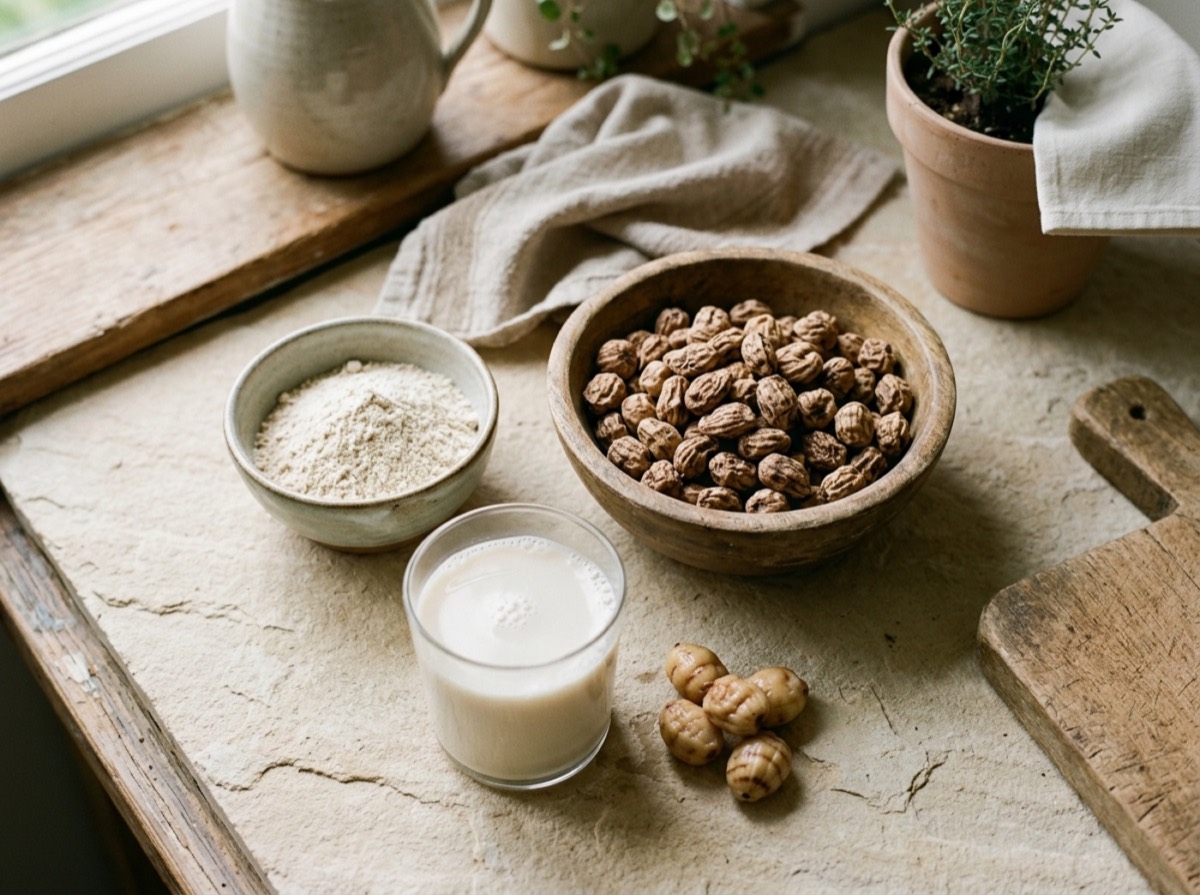
What are tiger nuts? Despite the name, tiger nuts are not nuts at all but small tubers that grow on the roots of a grassy sedge plant. They are about the size of a chickpea, wrinkled and striped, and have been eaten for thousands of years. Today they are popular as a gluten-free flour, a dairy-free drink and a chewy, naturally sweet snack.
This guide explains where tiger nuts come from, what they taste like, what they offer nutritionally and how to use them in your kitchen.
What are tiger nuts and where do they come from?
Tiger nuts are the edible tubers of Cyperus esculentus, a plant in the sedge family also known as yellow nutsedge, earth almond or chufa. The plant is native to parts of Africa, southern Europe and the Middle East, and its tubers have been found at ancient sites in Egypt, where they were eaten and placed in tombs.
Spain, especially the Valencia region, is famous for tiger nuts, which are the basis of a traditional drink called horchata de chufa. They are also grown and eaten in West Africa. The name comes from the striped skin of the dried tuber, not from any connection to tigers.
Are tiger nuts nuts? Allergy notes
No. Tiger nuts are tubers, botanically closer to root vegetables than to almonds or walnuts. For that reason, many people with tree nut allergies can eat them. However, allergies are individual, and tiger nut products may be processed in facilities that also handle nuts. If you have a nut allergy, read labels carefully and ask your doctor or allergist before trying them.
Tiger nuts are naturally gluten-free, which makes tiger nut flour a useful option for people who avoid gluten, as long as the product is packed without cross-contamination.
Tiger nuts are not nuts at all, but a sweet, fibre-rich tuber that has been eaten for thousands of years.
What do tiger nuts taste like?
Tiger nuts are mildly sweet with a nutty flavour that many people compare to almonds, coconut or chestnut, sometimes with a hint of vanilla. Dried whole tiger nuts are firm and very chewy, and the fibrous skin leaves some residue in the mouth. Soaking softens them and brings out their sweetness.
Peeled tiger nuts have a smoother texture and a lighter taste. Roasted tiger nuts are crunchier and more toasty.
Tiger nuts nutrition: fibre, fats and minerals
Tiger nuts are an energy-dense food. Most of their calories come from carbohydrates, including starch and natural sugars, with a substantial share of fat. The standout feature is fibre: dried tiger nuts are very high in dietary fibre, and a small handful can provide a meaningful part of the daily recommendation. Values vary with variety, drying and peeling, so check the nutrition panel of the product you buy.
The fat in tiger nuts is mostly monounsaturated, dominated by oleic acid, the same fatty acid that is prominent in olive oil. They also contain a modest amount of plant protein.
- Dietary fibre, including insoluble fibre and resistant starch.
- Mostly unsaturated fat, rich in oleic acid.
- Natural sugars that give a sweet taste without added sugar.
- Minerals such as potassium, magnesium, phosphorus and iron.
- Vitamin E and smaller amounts of other vitamins.
Tiger nut benefits: what the fibre can do
Much of the interest in tiger nuts comes from their fibre and resistant starch. Resistant starch is not digested in the small intestine and instead feeds beneficial bacteria in the gut, acting as a prebiotic. A fibre-rich diet is associated with better digestion, more regular bowel movements and steadier blood sugar after meals, and fibre also helps you feel full for longer.
Research specific to tiger nuts is still limited, and many studies are small or done in animals, so it is best to see them as a nutritious whole food rather than a remedy. Their value lies in adding fibre, healthy fats and minerals to a varied diet.
Are there downsides to eating tiger nuts?
Because they are so high in fibre, eating a large amount at once can cause bloating, gas or stomach discomfort, especially if your diet is usually low in fibre. Start with a small handful and increase gradually, and drink enough water.
Like many seeds and tubers, tiger nuts contain antinutrients such as phytates and tannins, which can reduce the absorption of some minerals. Soaking, roasting and sprouting reduce these compounds. Tiger nuts are also fairly calorie-dense, so portion size matters if you are watching your energy intake.
How to eat tiger nuts: soaking, flour and milk
Dried tiger nuts are hard, so most people soak them before eating. Cover them with plenty of water and leave them in the fridge for 12 to 24 hours, then drain and rinse. Soaked tiger nuts are pleasantly chewy and should be kept in the fridge and eaten within a few days.
Tiger nut flour is made from ground tubers. It is naturally sweet and absorbent, so it works well in cookies, pancakes, muffins and energy balls. Because it has no gluten, it is usually mixed with other flours or binders in bread and cakes. Start by replacing part of the flour in a recipe and add a little extra liquid if the dough seems dry.
- Snack: eat soaked or roasted tiger nuts on their own or in trail mix.
- Breakfast: sprinkle chopped or flaked tiger nuts over yoghurt, porridge or muesli.
- Baking: use tiger nut flour in cookies, crumbles and pancakes.
- Drink: blend soaked tiger nuts with water, strain and sweeten lightly to make horchata-style tiger nut milk.
- Desserts: use tiger nut milk as a base for ice cream or puddings.
How to buy and store tiger nuts
Tiger nuts are sold whole with the skin, peeled, sliced, roasted, as flour and as oil. Choose whole dried tiger nuts for snacking and milk, peeled ones if you prefer a softer texture, and flour for baking. Organic options are widely available.
Dried tiger nuts keep well. Store them in an airtight container in a cool, dry, dark place, where they last for many months. Tiger nut flour contains oil and is more delicate, so keep it sealed and consider the fridge once opened. Homemade tiger nut milk should be refrigerated and used within two or three days.
Frequently asked questions
Are tiger nuts actually nuts?
+
No. Tiger nuts are small tubers that grow on the roots of the Cyperus esculentus plant, a type of sedge. They got their name from their nutty taste and striped skin.
Can people with nut allergies eat tiger nuts?
+
Many people with tree nut allergies tolerate tiger nuts because they are not botanically nuts. Allergies vary, though, and cross-contamination is possible during processing. Check labels and speak to a doctor or allergist first.
Do you need to soak tiger nuts?
+
It is not required, but dried tiger nuts are very hard and chewy. Soaking them in water in the fridge for 12 to 24 hours softens them and makes them easier to eat and blend.
What is horchata de chufa?
+
Horchata de chufa is a traditional Spanish drink from the Valencia region, made by soaking and grinding tiger nuts with water, then straining and sweetening the liquid. It is served chilled and is naturally dairy-free.
Are tiger nuts good for gut health?
+
Tiger nuts are rich in fibre and resistant starch, which feed beneficial gut bacteria and support regular digestion. Research on tiger nuts themselves is still limited, so enjoy them as part of a varied, fibre-rich diet. Increase your intake slowly to avoid bloating.
Is tiger nut flour gluten-free?
+
Yes, tiger nut flour is naturally gluten-free. If you need to avoid gluten strictly, choose a product that is certified or labelled gluten-free to rule out cross-contamination.
How many tiger nuts should you eat a day?
+
There is no official amount, but a small handful is a sensible serving. Because they are high in fibre and calories, start with less and increase gradually while drinking enough water.
Tiger nuts are an old food that fits modern kitchens well: naturally sweet, gluten-free and rich in fibre and healthy fats. Soak them for a chewy snack, bake with the flour or blend them into a creamy drink. Start with small portions while your body gets used to the fibre, check labels if you have allergies, and you have a versatile ingredient that adds both flavour and nutrition.
How we research: Guides are written from established sources and checked for accuracy. They are general information, not professional advice.
Written by
Bitezine Editorial Team
Rankings, reviews & guides
Our editors research every piece from makers’ documentation, independent tests and owner reports, and update it when products change.