Guides
How to unclog a drain: sinks, showers and tubs without calling a plumber
How to unclog a drain step by step: boiling water, a plunger, a drain snake and the sink trap, plus when chemical cleaners are a bad idea and when to call a plumber.
 Bitezine Editorial TeamRankings, reviews & guides 6 min read
 AI generated
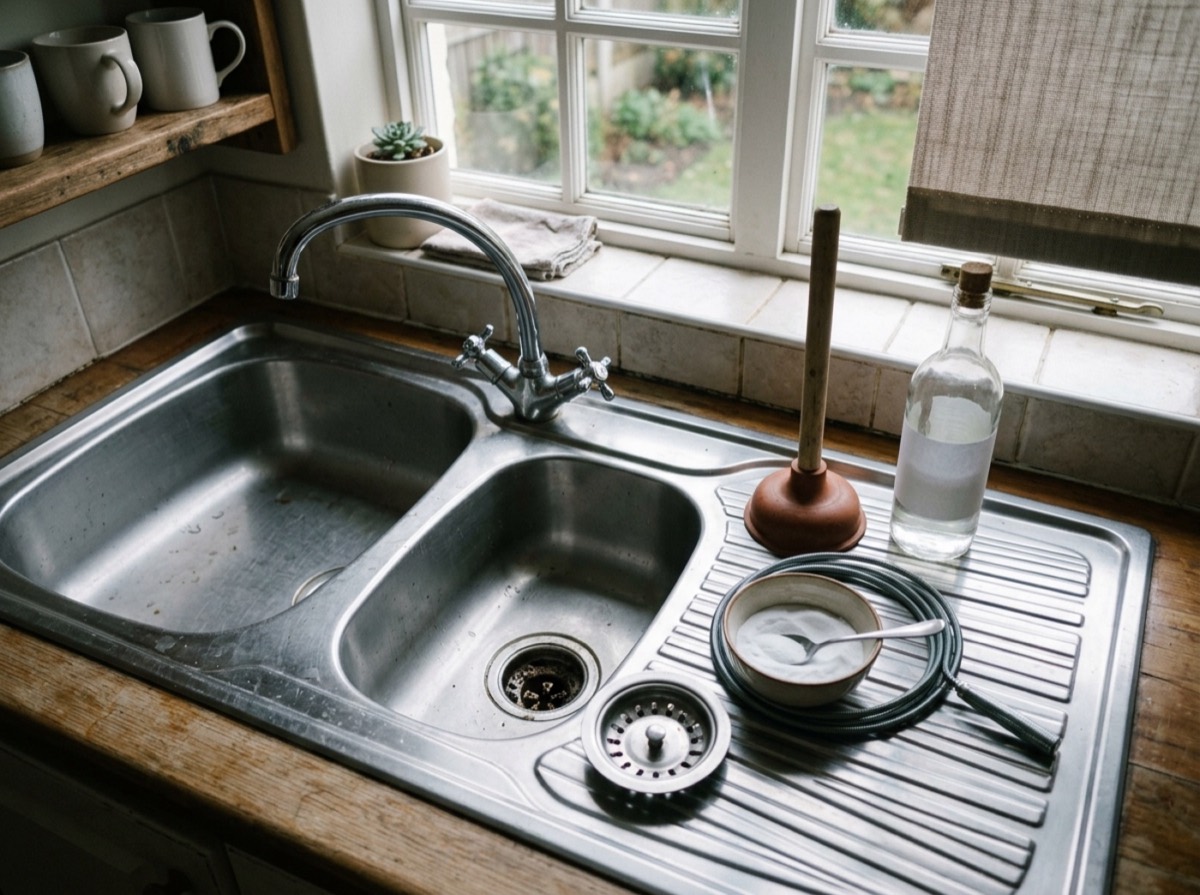
Knowing how to unclog a drain saves you a call-out fee and a lot of standing water. Most blockages in sinks, showers and tubs sit within the first metre of pipe, which means you can reach them with simple tools: a kettle, a plunger, a cheap plastic drain snake or a bucket and a wrench.
This guide works from the gentlest fix to the most involved one. Start at the top, stop as soon as the water runs freely, and read the safety notes before you reach for a bottle of chemical cleaner.
Why drains clog in the first place
Kitchen sinks usually block because of fat, oil and grease. Poured down warm, it cools in the pipe, turns solid and catches food scraps and coffee grounds. Bathroom drains block for a different reason: hair binds with soap residue into a dense, stringy plug, often just below the stopper.
Hard water adds a third factor. Mineral scale roughens the inside of pipes over time, giving debris more to cling to. Knowing which kind of clog you have helps you pick the right tool: grease responds to heat, while hair needs to be pulled out.
Step 1: Clear the stopper and try hot water
Remove the pop-up stopper or drain cover first. Many can be lifted out or unscrewed by hand, and a surprising number of 'blocked' basins are simply a stopper wrapped in hair. Clean it and test the drain.
For a greasy kitchen sink, pour a kettle of very hot water slowly into the drain, in two or three stages. This can soften a fresh grease plug. Use hot tap water rather than boiling water if you have plastic pipes, a porcelain basin or a sink full of standing water, because boiling water can soften PVC joints and crack cold ceramic.
Grease responds to heat, while hair needs to be pulled out.
Step 2: Use a plunger to unclog a sink or tub
A rubber cup plunger works well on sinks, tubs and shower trays. Leave a few centimetres of water in the basin so the cup seals, press it over the drain and pump firmly several times, then pull it off sharply. The pressure and suction together often dislodge soft blockages close to the opening.
If the water begins to swirl away, run the hot tap for a minute to flush the loosened debris further down.
Step 3: How to use a drain snake for hair clogs
For shower and bathtub drains, a barbed plastic drain strip is the quickest tool. Push it down the drain, twist it, and pull it out slowly. Expect an unpleasant clump of hair. Repeat until the strip comes up clean.
A small hand auger, also called a drain snake, reaches further. Feed the cable in until you feel resistance, tighten the lock, and crank the handle while pushing gently. The tip either breaks up the clog or hooks it so you can pull it back. Work slowly: forcing a metal snake can scratch enamel or damage older pipes.
- Wear rubber gloves and have a bin bag ready.
- Feed the cable in, do not hammer it in.
- Pull back and clean the tip often.
- Run hot water afterwards to check the flow.
Step 4: How to clean a sink trap
If the sink still drains slowly, the trap under it is the likely culprit. This is the U-shaped or bottle-shaped section directly below the basin, and it is designed to be opened.
Put a bucket underneath and lay down a towel. Unscrew the slip nuts by hand or with gentle help from pliers, remove the trap and empty it. Clean it with an old toothbrush and hot soapy water, check the rubber washers, then refit it hand-tight plus a small turn. Run water and check for drips. If the trap is clear but water still backs up, the blockage is in the pipe beyond, and you can feed a snake in from the open end.
Do baking soda and vinegar unclog drains?
The fizzing mix of baking soda and vinegar is popular, but it is mostly a mild cleaner and deodoriser. The reaction is brief and weak, and it will not dissolve a solid hair plug or a hardened grease blockage. It can help freshen a slow drain as part of regular maintenance, followed by hot water.
Treat it as a bonus, not a fix. For a real clog, mechanical tools do the work.
Chemical drain cleaners: safety notes
Chemical drain openers contain strong alkalis or acids. They can cause serious burns to skin and eyes, release fumes and generate heat inside the pipe. Repeated use can also damage older metal pipes and some plastic fittings. If you use one, follow the label exactly, ventilate the room and wear gloves and eye protection.
Never mix different drain products, and never combine them with bleach or other cleaners, because the reactions can produce toxic gases or violent heat. Do not use a plunger or snake after pouring in a chemical cleaner, since the water can splash back into your face. If a chemical cleaner has failed, tell the plumber what you used before they start work.
When to call a plumber
Call a professional if several drains in the house block at the same time, if water comes up in a shower when you run the washing machine, if you notice a sewage smell, or if the blockage returns within days. These point to a problem in the main drain line, tree roots or a venting issue that household tools will not reach. Persistent gurgling and damp patches near pipes are also worth a professional look.
Frequently asked questions
What is the fastest way to unclog a drain?
+
Remove the stopper and clean it, then try a plunger or a plastic drain strip. These fix most sink and shower clogs in a few minutes. If they fail, open and clean the trap under the sink.
How do I unclog a drain without chemicals?
+
Use hot water for grease, a plunger for soft clogs, a drain strip or hand auger for hair, and clean the sink trap by hand. These mechanical methods are safer for you and your pipes than chemical openers.
Can boiling water damage pipes?
+
It can. Boiling water may soften or loosen plastic pipe joints and can crack a cold porcelain sink. Very hot tap water is the safer choice for plastic plumbing and ceramic basins.
How do I unclog a shower drain full of hair?
+
Lift or unscrew the drain cover, pull out visible hair with gloved fingers, then use a barbed plastic drain strip to hook the rest. Fit a hair catcher afterwards to stop it happening again.
Is it safe to use drain cleaner in a blocked sink with standing water?
+
It is risky. The chemical sits in the basin instead of reaching the clog, and anyone who later plunges or opens the trap can be splashed. Bail out the water and use a mechanical method instead.
How can I stop drains from clogging?
+
Wipe greasy pans with kitchen paper before washing, scrape plates into the bin, use sink strainers and hair catchers, and run hot water through drains regularly. Clean stoppers every few weeks.
Most blocked drains give way to a plunger, a drain strip or a clean trap, with no chemicals and no call-out fee. Work from the simplest fix upward, protect your hands and eyes, and prevent the next clog with a strainer and a little care about what goes down the sink. When several drains block at once, let a plumber take it from there.
How we research: Guides are written from established sources and checked for accuracy. They are general information, not professional advice.
Written by
Bitezine Editorial Team
Rankings, reviews & guides
Our editors research every piece from makers’ documentation, independent tests and owner reports, and update it when products change.