Culture
How to start a vinyl collection: a beginner's guide to records
Start a vinyl collection the smart way: the gear you need, where to find records, how to check used vinyl and how to clean and store what you buy.
 Bitezine Editorial TeamRankings, reviews & guides 6 min read
 AI generated
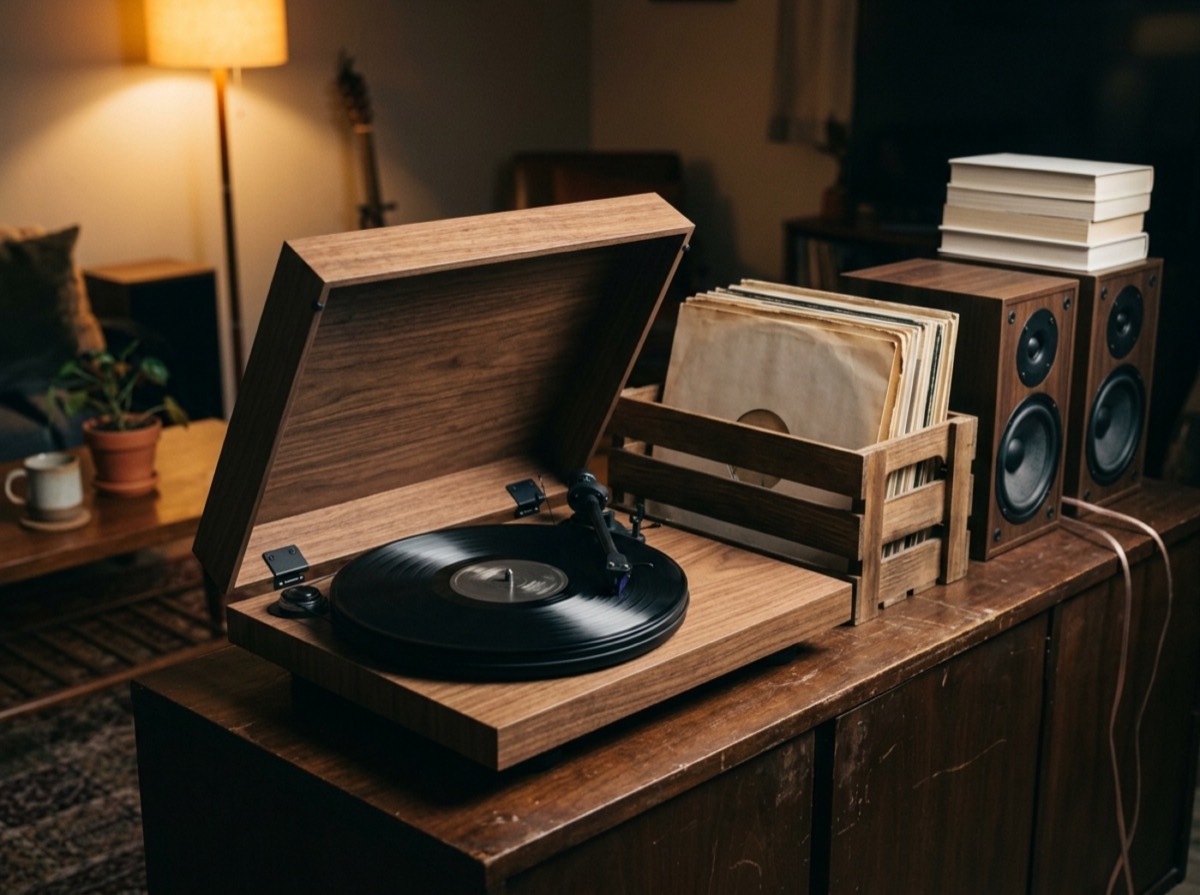
Learning how to start a vinyl collection is mostly about patience and a few good habits. Records reward you with large artwork, a deliberate way of listening and the fun of the hunt, but buying without a plan can quickly fill your shelves with albums you never play.
This guide covers the equipment you need, how records work, where to find them, how to judge second-hand copies and how to look after your collection so it sounds good for decades.
What do you need to play vinyl records?
A record player setup has four parts: a turntable, a cartridge with a stylus (the needle), a phono preamp and speakers or an amplifier. Some turntables have a phono preamp built in, and some powered speakers accept a turntable directly, which keeps a first setup simple.
The phono preamp matters because the signal from a cartridge is very weak and is recorded with a special equalisation curve. The preamp boosts it and reverses that curve. If you plug a turntable without one into an ordinary input, the music will sound thin and very quiet.
Spend where it counts. A turntable with an adjustable counterweight and a replaceable stylus will treat your records better than a cheap all-in-one suitcase player with a heavy tonearm. A worn or badly set stylus can damage grooves over time.
Record sizes and speeds explained: 33 vs 45 rpm
Most albums are 12-inch LPs that play at 33⅓ revolutions per minute, with roughly 20 minutes of music per side. Singles usually come on 7-inch records at 45 rpm with a few minutes per side. Some albums are cut at 45 rpm across two discs for more room in the grooves, so always check the label.
Older 78 rpm shellac records predate vinyl LPs and need a turntable with a 78 setting and a suitable stylus. They are a specialist corner of collecting, so most beginners leave them for later.
- 12-inch LP: usually 33⅓ rpm, the standard album format.
- 7-inch single: usually 45 rpm, often with a large centre hole that needs an adapter.
- 10-inch and 12-inch singles or EPs: speed varies, so read the label.
- 78s: brittle shellac discs from the first half of the twentieth century.
A small shelf of records you play often is worth more than crates you never open.
Start a vinyl collection with a clear focus
A focus keeps your budget under control and makes browsing more rewarding. Some collectors start with the albums that shaped their own taste. Others build around a genre, a record label, a decade or a single artist's catalogue.
A good first step is to write a short wish list of ten to twenty albums you truly love and would play from start to finish. Records are an album-first format, so music you usually hear as playlists may not suit vinyl as well.
Where to buy vinyl records, new and used
New pressings are easy to find and come in perfect condition, but used records are where collecting gets interesting and affordable. Mix both: buy new for albums that were never widely pressed, and hunt second-hand for classics that sold in huge numbers.
- Independent record shops: staff knowledge, listening stations and in-store events.
- Record fairs: many sellers in one room, with room to negotiate.
- Flea markets, charity shops and car boot sales: cheap finds, but condition varies widely.
- Online marketplaces for music: huge choice, but check seller ratings and grading.
- Directly from artists and labels, often at concerts, which supports musicians most.
How to check the condition of used vinyl
Condition decides both value and sound. Sellers commonly use a grading scale that runs from Mint and Near Mint through Very Good Plus and Very Good down to Good and Poor. For listening copies, Very Good Plus and better is a safe target. Lower grades are often noisy.
When you can, inspect the record in person under good light. Hold it at an angle and look along the grooves.
- Light hairline marks are common; scratches you can feel with a fingernail usually click.
- Look for warps by viewing the edge at eye level.
- A dull, greyish surface can mean heavy wear from a bad stylus.
- Check the label and sleeve for water damage, mould or writing.
- Ask to play it if the shop has a listening station.
Is 180-gram vinyl better?
Heavyweight pressings, often 180 grams, feel sturdy and are less prone to warping. Weight alone does not guarantee better sound, though. The quality of the mastering, the source used and the pressing plant matter far more. A well-made standard-weight record can easily beat a poorly made heavy one, so read reviews of specific pressings when sound quality is your priority.
How to clean and store vinyl records
Good care is cheap and prevents most problems. Handle records by the edges and the label only, since skin oils attract dust. Use a carbon-fibre brush before each play to lift surface dust, and give dirtier second-hand finds a wet clean with a dedicated record cleaning fluid and a soft microfibre cloth, or a record cleaning machine if you collect seriously.
Storage matters just as much. Records should stand upright, never stacked flat, because weight on top causes warping. Keep them away from radiators, sunny windows and damp rooms.
- Store records vertically on sturdy shelves, packed firmly but not tightly.
- Replace paper inner sleeves with anti-static ones to reduce scuffs and dust.
- Use outer plastic sleeves to protect the cover artwork.
- Keep the room at a stable, moderate temperature and humidity.
- Clean the stylus regularly with a small stylus brush, moving back to front.
Frequently asked questions
What do I need to start a vinyl collection?
+
You need a turntable, a cartridge and stylus, a phono preamp (sometimes built into the turntable) and speakers or an amplifier. Add a carbon-fibre brush and inner sleeves, then start with a short wish list of albums you love.
Is it cheaper to buy used vinyl records?
+
Usually yes, especially for popular albums that were pressed in large numbers. Rare or collectible pressings can cost more than new ones, so compare prices and always check the condition grade.
Do cheap record players damage vinyl?
+
Some can. Players with heavy, non-adjustable tonearms and low-quality styluses put extra pressure on grooves and may cause wear over time. A turntable with an adjustable counterweight and a replaceable stylus is a safer choice.
How should vinyl records be stored?
+
Store records upright in inner and outer sleeves, away from heat, sunlight and damp. Never stack them flat for long periods, because the weight can warp them.
Why does my record player sound so quiet?
+
The most common reason is a missing phono preamp. A turntable's signal is much weaker than other sources and needs to be boosted and equalised. Use the turntable's built-in preamp, an amplifier's phono input or a separate preamp.
What does VG+ mean on a record?
+
VG+ stands for Very Good Plus, a grade for used records that show slight signs of wear but should play well with little surface noise. It sits just below Near Mint on the commonly used grading scale.
The best vinyl collections are built slowly, one album that matters at a time. Get a setup that treats records gently, learn to judge used copies, keep everything clean and upright, and let your taste set the direction. A small shelf of records you play often is worth more than crates you never open.
How we research: Guides are written from established sources and checked for accuracy. They are general information, not professional advice.
Written by
Bitezine Editorial Team
Rankings, reviews & guides
Our editors research every piece from makers’ documentation, independent tests and owner reports, and update it when products change.