Food & Drink
How to roast nuts in the oven, in a pan or in an air fryer
How to roast nuts at home: oven temperatures and times, pan toasting, air fryer tips, how to salt and season them, and how to store roasted nuts.
 Bitezine Editorial TeamRankings, reviews & guides 6 min read
 AI generated
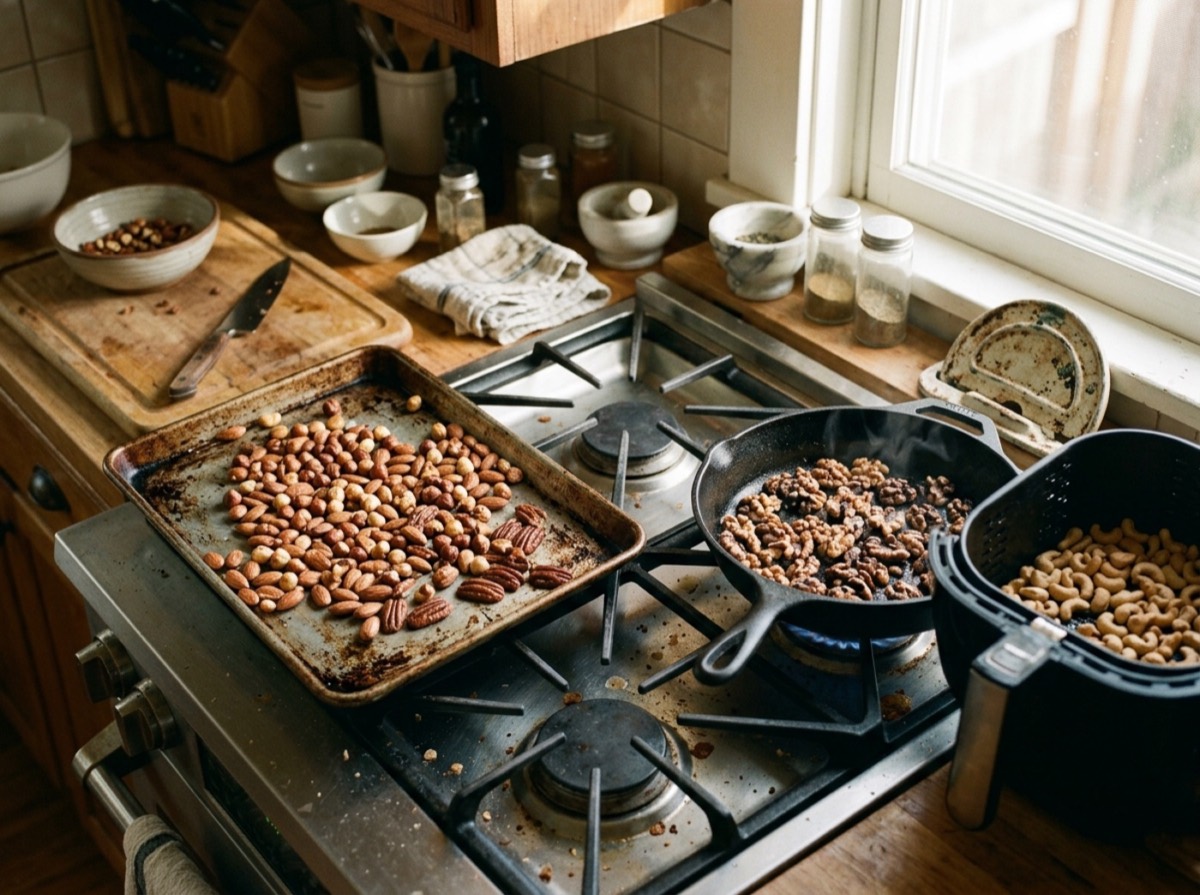
Knowing how to roast nuts at home is one of the simplest ways to make a dish taste better. Heat drives off moisture, browns the surface and deepens the flavour, so a handful of pale almonds or walnuts turns crunchy, fragrant and noticeably sweeter in a few minutes.
This guide covers the three main methods (oven, frying pan and air fryer), sensible temperatures, how to tell when nuts are done, how to season them and how to store them so they stay crisp and do not go rancid.
Why roast nuts at home?
Roasting triggers browning reactions between sugars and proteins, the same family of reactions that gives bread crust and seared meat their flavour. It also dries the nut, which improves crunch. Lightly toasted nuts lift salads, porridge, baking, pesto and stir-fries far more than raw ones.
Home roasting also gives you control. You choose the colour, the amount of salt and the oil, and you can roast small batches that you use while they are at their best.
How to roast nuts in the oven
The oven is the most even method and the best choice for more than a handful. A moderate temperature of about 160 to 180 °C (roughly 325 to 350 °F) browns nuts through to the centre without scorching the outside.
Times vary with size, oil content and your oven, so treat the ranges below as a starting point and check early. Oily nuts such as pecans, pine nuts and macadamias brown faster than dense nuts such as almonds and hazelnuts.
- Heat the oven and spread the nuts in a single layer on a dry baking tray.
- Roast in the middle of the oven, stirring or shaking the tray halfway through.
- Small or oily nuts (pine nuts, pecans, walnut pieces): often about 5 to 10 minutes.
- Medium nuts (cashews, whole walnuts, macadamias): often about 8 to 12 minutes.
- Dense nuts (whole almonds, hazelnuts): often about 10 to 15 minutes.
- Take them out when they smell toasty and are a shade darker, then tip them onto a cool plate.
Pull nuts from the heat a little early: they keep browning on the tray.
How to toast nuts in a pan
A dry frying pan is quickest for small amounts, such as a few spoonfuls of pine nuts, flaked almonds or seeds for a salad. Use a heavy pan over medium-low heat, add the nuts in one layer and keep them moving. Most small batches are ready in about 3 to 6 minutes.
Pan toasting colours nuts unevenly, since only the side touching the pan browns, so stir constantly and do not walk away. Pine nuts and flaked almonds can go from golden to burnt in under a minute.
Can you roast nuts in an air fryer?
Yes. An air fryer works like a small, fast convection oven. Use a lower temperature than you would in the oven, around 150 to 160 °C, and start checking after about 3 to 4 minutes. Shake the basket every couple of minutes.
Light nuts and flakes can be blown around by the fan, so they are better done in a pan or oven. Do not overfill the basket: a single layer or a shallow pile roasts much more evenly.
How to tell when nuts are done
Use your nose first. Roasted nuts smell rich and toasty, and that smell usually appears just before they are ready. Look at the colour, and cut one nut in half: the centre should be light golden rather than white.
Remember carry-over cooking. Nuts hold heat and keep browning for a minute or two after they leave the oven, so pull them slightly before they reach the colour you want and move them off the hot tray straight away. A burnt, bitter nut cannot be rescued, so a little too pale is the safer mistake.
How to salt and season roasted nuts
Salt does not stick to dry nuts. Toss them with a very small amount of oil before or straight after roasting, then add fine salt while they are warm. For an oil-free option, lightly coat the nuts in beaten egg white before roasting, or spray them with salted water and dry them in the oven.
Add delicate spices and sugar toward the end, since they burn faster than the nuts themselves.
- Smoked paprika, cumin and a pinch of cayenne for savoury snacking nuts.
- Rosemary, thyme and flaky salt for a classic bar-style mix.
- Cinnamon with a little sugar or maple syrup for sweet nuts.
- Soy sauce or tamari with a touch of honey for a glossy, salty-sweet finish.
- Curry powder and lime zest for cashews.
Nut-specific tips: hazelnuts, almonds and walnuts
Hazelnuts have papery skins that turn bitter. Roast them until the skins crack, wrap them in a clean tea towel for a minute, then rub vigorously; most of the skin will flake off. Do not worry about the last bits.
Whole almonds need the longest time and are best done in the oven. Flaked and slivered almonds are thin, so treat them like pine nuts. Walnuts and pecans have a lot of fat and a delicate structure, so roast them gently and check often. Blanched nuts show colour clearly, while nuts with skins need the cut test to judge doneness.
Food safety and storage for roasted nuts
Raw nuts are a low-moisture food, but they have been linked to Salmonella outbreaks in the past, and a quick home toast is not a guaranteed way to kill bacteria. Buy nuts from reputable sellers, keep them dry and handle them with clean hands and equipment. Most nuts sold for eating have already been treated or processed to reduce this risk.
The bigger everyday problem is rancidity. The fats in nuts oxidise with heat, light and air, and roasting speeds this up. Let roasted nuts cool completely before storing them, or trapped steam will make them soft. Keep them in an airtight jar in a cool, dark cupboard and use them within a couple of weeks for the best flavour, or refrigerate or freeze them to keep them longer. A bitter, paint-like smell means the nuts are rancid and should be thrown away.
If you roast nuts for others, remember that tree nuts and peanuts are major allergens. Clean trays, pans and boards thoroughly and label any nut snacks you share.
Frequently asked questions
What temperature should I roast nuts at?
+
A moderate oven of about 160 to 180 °C (325 to 350 °F) works for most nuts. It browns them evenly without burning the outside. Use the lower end for oily or small nuts and check early.
How long does it take to roast nuts in the oven?
+
Most nuts take between about 5 and 15 minutes. Pine nuts and pecans are quick, cashews and walnuts sit in the middle, and whole almonds and hazelnuts take the longest. Stir halfway and trust the smell and colour over the clock.
Should you use oil when roasting nuts?
+
It is not necessary. Nuts contain plenty of fat and roast well dry. A small amount of oil helps salt and spices stick, and egg white or salted water are oil-free alternatives.
Why do my roasted nuts taste bitter?
+
Bitterness usually comes from over-roasting, from hazelnut skins left on, or from nuts that were already rancid. Remove nuts slightly early, since they keep browning off the heat, and smell raw nuts before roasting.
Can I roast nuts in an air fryer?
+
Yes. Use about 150 to 160 °C and check after 3 to 4 minutes, shaking the basket often. Very light nuts and flakes may blow around, so toast those in a pan instead.
How long do roasted nuts last?
+
In an airtight container in a cool, dark place, they taste best within about two weeks. They keep longer in the fridge or freezer. Throw them away if they smell like paint or taste bitter, which are signs of rancidity.
Does roasting nuts kill bacteria?
+
Heat reduces bacteria, but a short home toast is not a validated way to make raw nuts safe. Buy nuts from trusted sources, keep them dry and use clean equipment.
Once you know how to roast nuts properly, a tray in the oven for ten minutes becomes an easy upgrade for salads, baking and snacks. Keep the heat moderate, stir halfway, pull them a little early and store them airtight once cool.
How we research: Guides are written from established sources and checked for accuracy. They are general information, not professional advice.
Written by
Bitezine Editorial Team
Rankings, reviews & guides
Our editors research every piece from makers’ documentation, independent tests and owner reports, and update it when products change.