Food & Drink
How to make a sourdough starter from scratch
How to make a sourdough starter with just flour and water: a day-by-day plan, feeding ratios, signs it is ready, common problems and when to throw it out.
 Bitezine Editorial TeamRankings, reviews & guides 6 min read
 AI generated
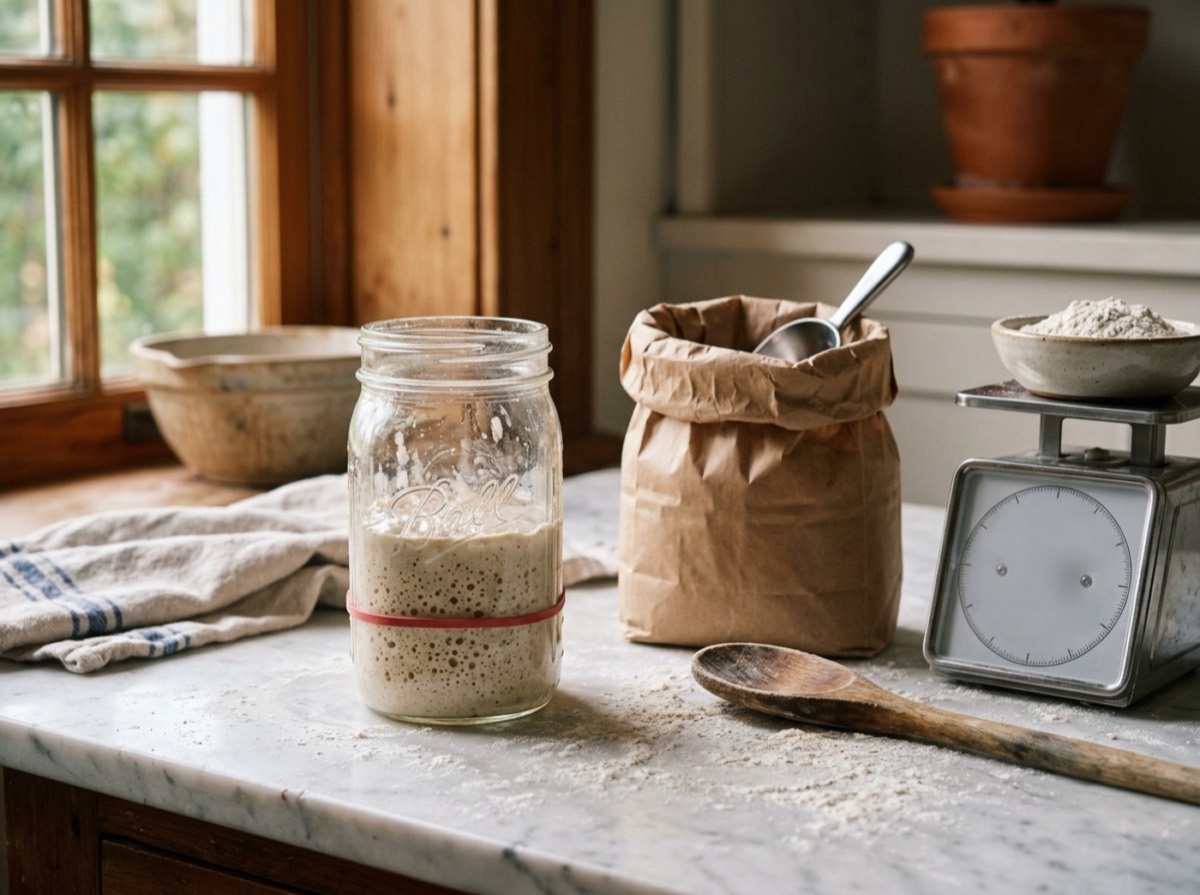
Learning how to make a sourdough starter needs only flour, water, a jar and about one to two weeks of short daily feedings. Over that time, wild yeasts and lactic acid bacteria that are naturally present in flour settle into a stable culture that can raise bread without any packaged yeast.
This guide gives a simple day-by-day plan, explains what is happening in the jar, shows how to tell when the starter is ready and covers the problems almost everyone meets, including when a starter is unsafe and must be thrown away.
What is a sourdough starter?
A sourdough starter is a living mix of flour and water that contains a community of wild yeasts and lactic acid bacteria. The bacteria produce lactic and acetic acids, which give sourdough its tang, and they break down parts of the flour that yeast cannot use. The yeasts produce carbon dioxide, which makes dough rise.
As the culture matures, it becomes acidic. A settled starter typically sits at a pH of roughly 4.4 to 4.6 or lower, and that acidity helps keep unwanted microbes out. It is the reason a healthy starter can live on a kitchen counter or in a fridge for years.
What you need to make a sourdough starter
Weighing ingredients with a kitchen scale is much more reliable than using cups, because flour settles differently each time.
- Whole-grain flour to begin with: whole wheat or rye gives the culture a strong start.
- Plain white wheat flour (or more whole-grain flour) for regular feeding.
- Lukewarm or room-temperature water; if your tap water is heavily chlorinated, let it stand for a while or use filtered water.
- A clean glass jar of about 1 litre, with a loose lid or cloth cover.
- A rubber band or piece of tape to mark the level after each feeding.
- A kitchen scale and a spoon or spatula.
The quiet days in the first week are not failure; they are the culture sorting itself out.
Sourdough starter recipe: a day-by-day plan
This plan uses equal weights of flour and water, known as 100% hydration. Keep the jar somewhere around 21 to 27 °C (70 to 80 °F). A cooler kitchen still works, only more slowly.
- Day 1: Mix 50 g whole-grain flour with 50 g water until no dry flour remains. Cover loosely and leave for 24 hours.
- Day 2: You may see a few bubbles, or nothing. Stir, then discard all but about 50 g and add 50 g flour and 50 g water.
- Day 3 to 4: Repeat the discard and feed. The mixture may suddenly bubble a lot and then go quiet; this is normal.
- Day 5 onward: Switch to two feedings a day, about 12 hours apart: keep 50 g starter, add 50 g flour (white or a mix) and 50 g water.
- Continue until the starter reliably doubles in volume within about 4 to 8 hours of feeding, which usually happens somewhere between day 7 and day 14.
Why the starter goes quiet after a few days
Many beginners panic around day 3 or 4. The early burst of bubbles often comes from bacteria that thrive in fresh flour but cannot tolerate acid. As the mixture becomes more acidic, those bacteria die off and activity drops, sometimes for a day or two. Then the acid-tolerant sourdough yeasts and lactic acid bacteria take over and the starter comes back to life.
The fix is patience. Keep feeding on schedule, keep the jar warm and do not add commercial yeast. Throwing the starter away at this stage is the most common reason people think they have failed.
How to tell when your sourdough starter is ready
A starter is ready to bake with when it behaves predictably. Look for several signs together rather than one.
- It at least doubles in size within about 4 to 8 hours of feeding, two or three times in a row.
- It is full of bubbles throughout, with a domed or slightly cracked top at its peak.
- It smells pleasantly sour, yeasty or fruity, like yoghurt or mild vinegar.
- It has a thick, stretchy, mousse-like texture when stirred.
- A small spoonful dropped into water often floats at its peak, though this float test is not reliable for every flour or hydration.
Common sourdough starter problems and fixes
Most problems come from temperature, timing or flour, and they are easy to fix once you know what to look for.
- Grey or dark liquid on top (hooch): the starter is hungry. Pour it off or stir it in, then feed more often.
- No rise at all: move it somewhere warmer, add some whole-grain flour and keep feeding on schedule.
- Rises then collapses quickly: it is peaking early; use cooler water or feed a larger ratio of flour and water.
- Very runny: reduce the water slightly or use more whole-grain flour, which absorbs more water.
- Smells of nail polish remover: a sign of hunger; feed it more regularly.
- Starter creeping out of the jar: use a bigger jar and keep a smaller amount.
When to throw a sourdough starter away (food safety)
A healthy starter's acidity protects it well, but contamination can happen, especially in the first few days before it becomes acidic. Throw the whole starter away, including anything it touched, if you see fuzzy mould of any colour, or pink, orange or red streaks or patches. Those colours can indicate bacteria you do not want. Do not try to scrape the problem off and keep going.
Hooch and a sharp, sour or alcoholic smell are harmless. A rotten or putrid smell that does not go away after a couple of feedings is a reason to start again.
To lower the risk, use a clean jar, wipe the rim after each feeding so dried bits do not mould, and cover the jar to keep insects out. Raw starter and raw dough contain uncooked flour, which can carry harmful bacteria, so do not eat them raw and wash your hands and surfaces after handling them.
How to store and maintain a sourdough starter
If you bake often, keep the starter at room temperature and feed it once or twice a day. If you bake weekly or less, store it in the fridge with a loose lid and feed it about once a week. Before baking, take it out and give it one or two feedings at room temperature until it doubles reliably again.
The starter you remove before each feeding is called discard. Use it in pancakes, crackers, waffles or flatbreads, or keep a small amount so you are not wasting much flour. For a backup, spread a thin layer of active starter on baking paper, let it dry completely, break it into flakes and store them in an airtight jar.
Frequently asked questions
How long does it take to make a sourdough starter?
+
Usually one to two weeks. Some starters are active after about five to seven days, while cooler kitchens or white flour can make it take longer. It is ready when it doubles reliably within a few hours of feeding.
What is the best flour for a sourdough starter?
+
Whole-grain rye or whole wheat flour is the easiest way to get a starter going, because it carries more nutrients and microbes. After the first days you can feed with white wheat flour or keep using whole grain.
Why is my sourdough starter not bubbling?
+
The most common reasons are a cold kitchen, the quiet phase after the first few days, or not enough time. Move it somewhere warmer, add some whole-grain flour and keep feeding on schedule.
What is the liquid on top of my sourdough starter?
+
It is called hooch, a harmless mix of alcohol and water that forms when the starter is hungry. Pour it off for a milder flavour or stir it in for a tangier one, then feed the starter.
Why do you discard sourdough starter?
+
Discarding keeps the starter at a manageable size and keeps the balance of fresh flour to old starter high enough for the culture to stay active. Without discarding, you would need ever larger amounts of flour.
How do I know if my sourdough starter has gone bad?
+
Throw it away if you see fuzzy mould or pink, orange or red streaks. Grey liquid, a sour smell or an alcohol smell are normal signs of hunger and can be fixed by feeding.
Can I keep a sourdough starter in the fridge?
+
Yes. Feed it, let it sit for an hour or two, then refrigerate it and feed it about once a week. Refresh it at room temperature for one or two feedings before baking.
Once you know how to make a sourdough starter, the process feels less like a science project and more like a daily habit: discard, feed, watch it rise. Keep it warm, clean and well fed, get through the quiet days, and within a couple of weeks you will have a culture that can raise bread for years.
How we research: Guides are written from established sources and checked for accuracy. They are general information, not professional advice.
Written by
Bitezine Editorial Team
Rankings, reviews & guides
Our editors research every piece from makers’ documentation, independent tests and owner reports, and update it when products change.