Food & Drink
How to choose olive oil: grades, labels and taste
How to choose olive oil: what extra virgin really means, how to read the label, harvest dates, packaging, taste and which oil to use for cooking.
 Bitezine Editorial TeamRankings, reviews & guides 6 min read
 AI generated
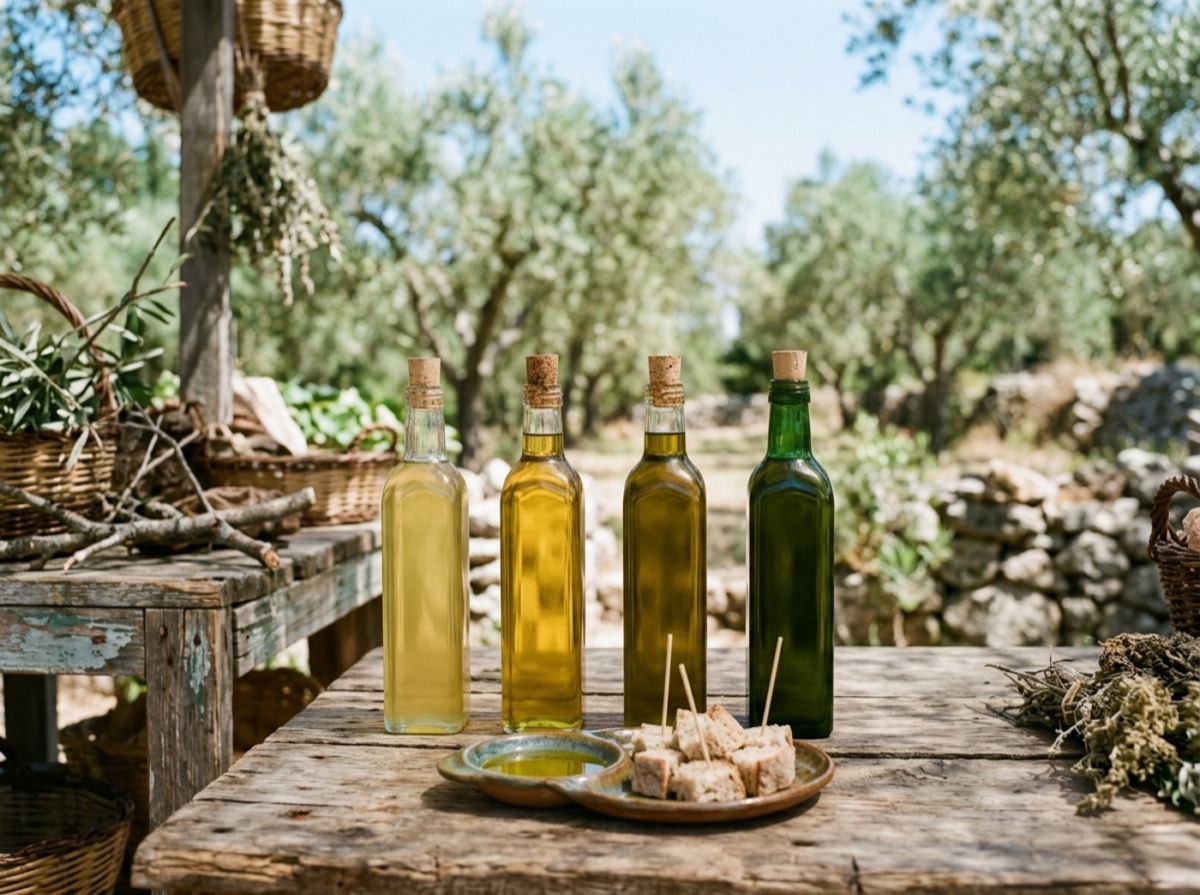
Knowing how to choose olive oil saves money and improves almost everything you cook. Supermarket shelves mix very different products under similar-looking labels, and price alone does not tell you what is in the bottle. A few details on the label, and a little tasting, tell you far more.
This guide explains the official olive oil grades, the words that matter on a label, how packaging and dates affect quality, what good oil tastes like and which type to use for dressing, cooking and frying.
Olive oil grades explained
In the EU, and in international standards, olive oil is sold in strictly defined categories. The grade is the single most important piece of information on the bottle.
- Extra virgin olive oil: the top grade. Obtained from olives only by mechanical means, with free acidity of no more than 0.8% and no taste defects, as confirmed by a trained tasting panel.
- Virgin olive oil: also mechanically extracted, but allowed higher acidity (up to 2%) and minor taste defects.
- Olive oil (sometimes called pure or classic olive oil): a blend of refined olive oil with some virgin oil. Milder in taste and lower in natural antioxidants.
- Olive pomace oil: extracted from the pulp left after pressing, using solvents, then refined and usually blended with some virgin oil.
- Lampante oil: a low-quality virgin oil that is not fit to eat until refined, so you will not see it on shelves.
What does extra virgin olive oil really mean?
Extra virgin is a legal category, not a marketing adjective. The oil must come from olives processed only with mechanical methods such as crushing, malaxing and centrifuging, without chemical solvents or refining. It must pass chemical tests, including a free acidity limit of 0.8%, and a sensory test in which trained tasters confirm it has some fruitiness and no defects.
Low acidity is a sign of healthy fruit handled quickly, but you cannot taste acidity directly, and many good extra virgin oils sit well below the limit. Some producers print the measured value; treat it as a useful extra, not the whole story.
A fresh, peppery bite at the back of the throat is a sign of good olive oil, not a flaw.
How to read an olive oil label
Beyond the grade, look for these details. The more specific the label, the more a producer is usually willing to stand behind the oil.
- Origin: in the EU, extra virgin and virgin oils must show where the olives were grown and processed, whether a single country or a blend such as 'EU oils' or 'EU and non-EU oils'.
- Harvest date or harvest season: optional, but valuable. Fresher oil tastes better, so choose the most recent harvest you can find.
- Best-before date: typically set up to around 18 to 24 months after bottling, which says little about freshness on its own.
- PDO or PGI: EU protected designations that tie the oil to a defined region and production rules.
- 'Cold extraction' or 'first cold pressed': in the EU these terms are only allowed when the oil was obtained below 27 °C. Most modern oil is centrifuged, so 'cold extracted' is the more accurate wording.
- Olive variety: single-variety oils such as Picual, Koroneiki, Arbequina or Coratina each have a recognisable style.
What does 'light' olive oil mean?
'Light' or 'mild' on an olive oil label refers to flavour and colour, not calories. These oils are usually refined blends in the 'olive oil' category and contain the same amount of fat and energy as any other oil, roughly 9 kcal per gram. They are useful when you want a neutral taste, for example in some baking, but they lack the aroma and much of the polyphenol content of extra virgin oil.
Packaging, freshness and storage
Olive oil's enemies are light, heat and air. Choose oil in dark glass, tins or opaque containers, and avoid clear bottles that have been sitting under bright shop lights. Buy a size you will finish within about one to two months of opening.
At home, keep the bottle closed, away from the stove and out of the sun. A cool, dark cupboard is ideal. The fridge is not necessary; cold oil can turn cloudy or partly solid, which is harmless and reverses at room temperature. Oil that smells like crayons, putty or stale nuts has gone rancid and will spoil the taste of your food, though it is not dangerous in the short term.
What should good olive oil taste like?
Pour a little into a small glass, warm it in your hand, smell it and then sip. Good extra virgin olive oil smells fresh and green or ripe and fruity: think cut grass, tomato leaf, artichoke, green apple, almond or banana. Official tasting recognises three positive attributes: fruitiness, bitterness and pungency.
Bitterness and a peppery catch at the back of the throat are good signs. They come from polyphenols, natural antioxidants that are most abundant in fresh, early-harvest oil. Defects include musty, muddy, vinegary, metallic and rancid notes. If an 'extra virgin' oil tastes flat, greasy or stale, it may be old or poorly stored, even if the label is genuine.
Which olive oil is best for cooking and frying?
Extra virgin olive oil is suitable for most everyday cooking, including sautéing, roasting and shallow frying. Its smoke point is often cited somewhere around 180 to 210 °C depending on quality, and its antioxidants help it resist breaking down. Normal pan cooking stays below that range.
A practical approach is to keep two oils: a good, affordable extra virgin oil for cooking and a more characterful, fresh extra virgin oil for finishing salads, soups, grilled vegetables and bread. Refined olive oil or pomace oil, with a higher smoke point and neutral flavour, is a sensible choice for deep frying.
How to avoid fake or low-quality olive oil
Olive oil is one of the foods most often targeted by fraud, from mislabelling lower grades as extra virgin to blending with cheaper oils. You cannot prove authenticity at home, and popular tricks such as putting oil in the fridge to see if it solidifies are not reliable tests.
What you can do is reduce the risk. Buy from sellers with good turnover, favour labels with a specific origin, a harvest date and a named producer, consider PDO or PGI oils, and be wary of extra virgin oil priced far below the usual market level. Above all, trust your nose and palate: fresh fruitiness, bitterness and pepperiness are hard to fake.
Frequently asked questions
What is the difference between extra virgin olive oil and olive oil?
+
Extra virgin olive oil is extracted only mechanically, has free acidity of 0.8% or less and passes a taste test with no defects. Products sold simply as 'olive oil' are blends of refined and virgin oils, with milder flavour and fewer natural antioxidants.
How can I tell if olive oil is good quality?
+
Check for the extra virgin grade, a specific origin, a recent harvest date and dark or opaque packaging. Then taste it: good oil smells fresh and fruity and often has some bitterness and a peppery finish.
Can you cook with extra virgin olive oil?
+
Yes. Extra virgin olive oil works well for sautéing, roasting and shallow frying, since everyday cooking temperatures stay below its smoke point. For deep frying, refined olive oil is a more economical choice.
What does cold pressed olive oil mean?
+
In the EU, 'first cold pressed' and 'cold extraction' may only be used when the oil was obtained at below 27 °C. Most oil today is extracted by centrifuge rather than a press, so 'cold extracted' is the more common accurate term.
Is light olive oil lower in calories?
+
No. 'Light' describes a milder flavour and paler colour. Light olive oil has the same fat and calories as other oils, and it is usually a refined blend.
Why does my olive oil taste bitter or peppery?
+
Bitterness and pepperiness come from polyphenols, natural antioxidants found in fresh, high-quality extra virgin oil. They are considered positive qualities, especially in early-harvest oils.
How long does olive oil last after opening?
+
For the best flavour, use an opened bottle within about one to two months. Keep it closed, cool and away from light. Oil that smells like crayons or putty has gone rancid.
Choosing olive oil gets easy once you look past the front of the bottle: check the grade, origin and harvest date, pick dark packaging and trust your sense of taste. Keep one reliable extra virgin oil for cooking and a fresh, flavourful one for finishing, and store both away from heat and light.
How we research: Guides are written from established sources and checked for accuracy. They are general information, not professional advice.
Written by
Bitezine Editorial Team
Rankings, reviews & guides
Our editors research every piece from makers’ documentation, independent tests and owner reports, and update it when products change.