Guides
How to change a tyre: a safe step-by-step guide
How to change a tyre safely at the roadside: what to check first, where to put the jack, how to swap the wheel and what to do after fitting a spare.
 Bitezine Editorial TeamRankings, reviews & guides 7 min read
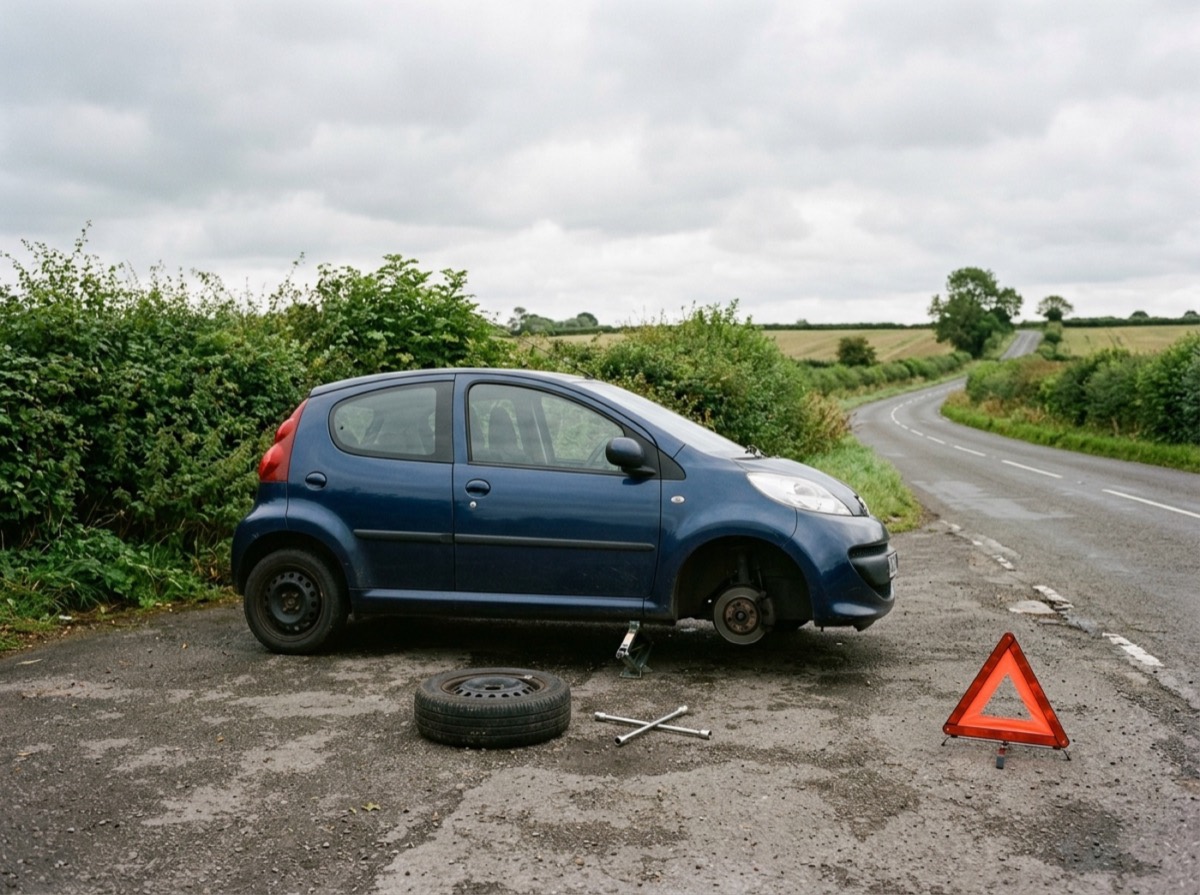 AI generated
Knowing how to change a tyre is one of the most useful practical skills a driver can have. A puncture rarely happens at a convenient moment, and being able to swap a flat for the spare in a calm, safe way can save you a long wait at the roadside.
This guide walks through the whole job: deciding whether it is safe to do it yourself, the tools you need, how to jack up the car correctly, how to fit the spare, and what to check once you are moving again. Always read your vehicle handbook too, because jack points and equipment differ between cars.
Safety first: should you change the tyre yourself?
Your safety matters more than the tyre. If you get a flat, slow down gradually, keep a firm grip on the steering wheel and pull over somewhere level, firm and well away from moving traffic. A quiet side road, a car park or a wide lay-by is ideal. Driving a short distance on a flat at low speed to reach a safer place is usually better than stopping on a narrow bend, though it may ruin the tyre.
Do not attempt a roadside wheel change on a motorway hard shoulder or next to fast traffic. In that situation, get everyone out on the side away from the traffic, move behind the safety barrier if there is one, and call for breakdown assistance or the emergency services.
- Switch on your hazard warning lights as soon as you stop.
- Put on a high-visibility vest before you get out. In Germany and many other European countries, carrying one is a legal requirement.
- Place the warning triangle well behind the car. German rules call for a sufficient distance and at least 100 metres on fast roads such as the Autobahn; walk facing the oncoming traffic, behind the barrier where possible.
- Ask passengers to wait in a safe place away from the car and the road.
- If the ground is soft, sloping or you feel unsure at any point, stop and call for help.
What you need to change a flat tyre
Most cars carry the basic kit under the boot floor or in a side panel. Check it now, not at the roadside, because many newer cars come with a tyre repair kit instead of a spare wheel.
- A spare wheel (full-size or space-saver) with the correct pressure.
- A car jack and the wheel brace (the wrench for the wheel nuts or bolts).
- The locking wheel nut key, if your wheels use locking nuts.
- Your vehicle handbook, which shows the jack points.
- Gloves, a torch and something to kneel on.
- A wheel chock or a sturdy block to stop the car rolling (optional but helpful).
Your safety matters more than the tyre, so choose where you stop before you think about the jack.
How to change a tyre step by step
Once the car is parked safely and you have the kit ready, work through these steps in order. Take your time: rushing is how wheels end up loose.
- Apply the handbrake firmly and put the car in first gear or reverse (Park for an automatic). Switch off the engine.
- Chock the wheel diagonally opposite the flat, if you have a chock.
- Remove any hubcap or bolt covers, then use the wheel brace to loosen each wheel nut about half a turn anticlockwise while the tyre is still on the ground. Do not remove them yet.
- Find the correct jack point shown in the handbook, usually a reinforced section of the sill close to the wheel. Place the jack on firm ground and raise it until it touches the jack point squarely.
- Raise the car until the flat tyre is just clear of the ground, with enough room to fit the inflated spare.
- Remove the wheel nuts completely and keep them together in a safe place. Pull the wheel straight towards you and lay it flat, not rolling away.
- Lift the spare onto the hub, lining up the holes with the studs or bolt holes.
- Fit the nuts by hand first, then tighten them lightly with the brace in a star or criss-cross pattern so the wheel sits evenly.
- Lower the car slowly until the tyre takes the weight, then remove the jack.
- Tighten each nut fully, again in a star pattern, using your body weight on the brace rather than jumping on it.
- Refit any hubcap, stow the flat tyre and all the tools, and collect the warning triangle.
Where to put the jack on a car
Placing the jack in the wrong spot can damage the underbody or let the car slip. Most cars have marked jack points along the sill behind the front wheels and in front of the rear wheels, often indicated by small notches or arrows. Some cars have a reinforced pinch weld that fits into a slot on the jack head.
Never put any part of your body under a car that is only supported by the jack supplied with the vehicle. These jacks are meant for lifting a wheel clear for a few minutes, not for working underneath. If the jack starts to lean, lower the car and reposition it.
Driving on a space-saver spare tyre
Many cars carry a narrow temporary spare, often called a space-saver. It is designed to get you to a garage, not to replace a normal tyre. These spares usually carry a maximum speed on a label or on the wheel itself, commonly around 80 km/h (50 mph). Follow that limit and your handbook.
Expect the car to feel different. Braking distances can be longer and handling less stable, so drive gently, leave more space and avoid long trips. Check the spare's pressure as soon as you can, because spares often sit unused for years and lose air.
Tyre repair kits and run-flat tyres
If your car has no spare, it probably has a tyre repair kit with sealant and a small compressor. These can seal small punctures in the tread, typically from a nail or screw, but not sidewall damage, large cuts or a tyre that has come off the rim. Follow the kit's instructions exactly, observe its speed limit and tell the tyre fitter the sealant has been used.
Run-flat tyres are built to keep supporting the car for a limited distance after a puncture. The car handbook states how far and how fast you can drive. Many fitters will not repair a run-flat that has been driven on while deflated, so plan for a replacement.
What to do after changing a tyre
Wheel nuts can settle after the first short drive. Recheck them with the brace after a short distance, or ask a garage to tighten them to the torque specified by the manufacturer with a torque wrench. Many workshops recommend a check after roughly 50 to 100 kilometres.
Take the damaged tyre to a fitter promptly. A puncture in the central tread area can often be repaired to recognised standards, while damage to the sidewall or shoulder usually means a new tyre. Finally, put the spare or a replacement back in the boot and restock anything you used, so you are ready next time.
Frequently asked questions
How long does it take to change a tyre?
+
For most people it takes around 15 to 30 minutes, including setting up safely. It may take longer the first time or if the wheel nuts are very tight. Practising once at home makes a real difference.
Should I loosen wheel nuts before jacking up the car?
+
Yes. Loosen them slightly while the tyre is still on the ground, so the wheel cannot spin as you turn the brace. Remove them fully only once the wheel is off the ground.
In what order should I tighten wheel nuts?
+
Tighten them in a star or criss-cross pattern rather than going round in a circle. This pulls the wheel evenly onto the hub. Do a light pass first, then a firm pass once the car is lowered.
How fast can I drive on a space-saver spare?
+
Follow the limit printed on the spare or in the handbook, which is commonly around 80 km/h (50 mph). Treat it as a short-term fix and replace it with a proper tyre as soon as possible.
Can I change a tyre on the motorway hard shoulder?
+
It is not recommended. Traffic passes very close and fast, so move to a safe place behind the barrier and call for breakdown help. Only change a wheel yourself where you are well away from traffic.
What if I cannot find the locking wheel nut key?
+
Check the glovebox, the boot floor and the tool tray first. Without the key you cannot remove a locking nut safely, so call breakdown assistance or a garage, which has tools to remove them.
Learning how to change a tyre is mainly about order and patience: stop somewhere safe, loosen the nuts before lifting, use the correct jack point, tighten in a star pattern and check the nuts again after a short drive. Look at your spare, jack and wheel brace today, so a puncture becomes a short delay rather than a stressful afternoon.
How we research: Guides are written from established sources and checked for accuracy. They are general information, not professional advice.
Written by
Bitezine Editorial Team
Rankings, reviews & guides
Our editors research every piece from makers’ documentation, independent tests and owner reports, and update it when products change.