Culture
The history of board games: from ancient Egypt to the modern tabletop boom
The history of board games spans 5,000 years, from Senet and the Royal Game of Ur to chess, Go, Monopoly and the modern tabletop revival led by German-style games.
 Bitezine Editorial TeamRankings, reviews & guides 6 min read
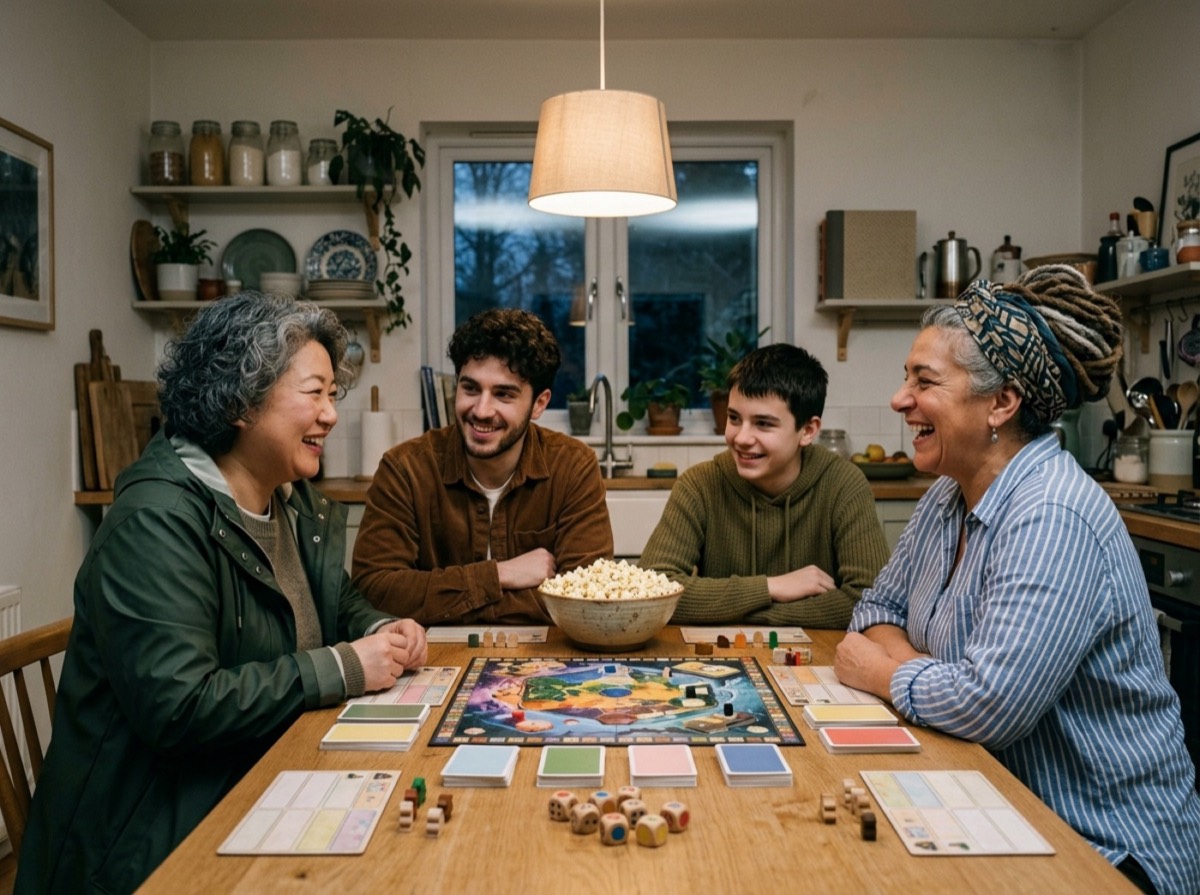
 AI generated
The history of board games stretches back at least five thousand years, making tabletop play one of humanity's oldest shared pastimes. Long before writing was common, people were scratching grids into stone, rolling bones and racing pieces across boards.
This article traces board game history from the earliest finds in Egypt and Mesopotamia through the great strategy games of Asia, the mass-produced family games of the industrial age and the modern revival that has filled cafés and living rooms with new designs.
When were board games invented?
Nobody knows exactly, but the evidence is very old. Archaeologists have found rows of carved pits in Neolithic sites in the Near East, dated to several thousand years before the first known named games, which some researchers interpret as early game boards.
The first games we can name come from the Bronze Age. From that point on, board games appear in almost every major civilisation, often closely tied to religion, status and the idea of chance as fate.
Senet and Mehen: the board games of ancient Egypt
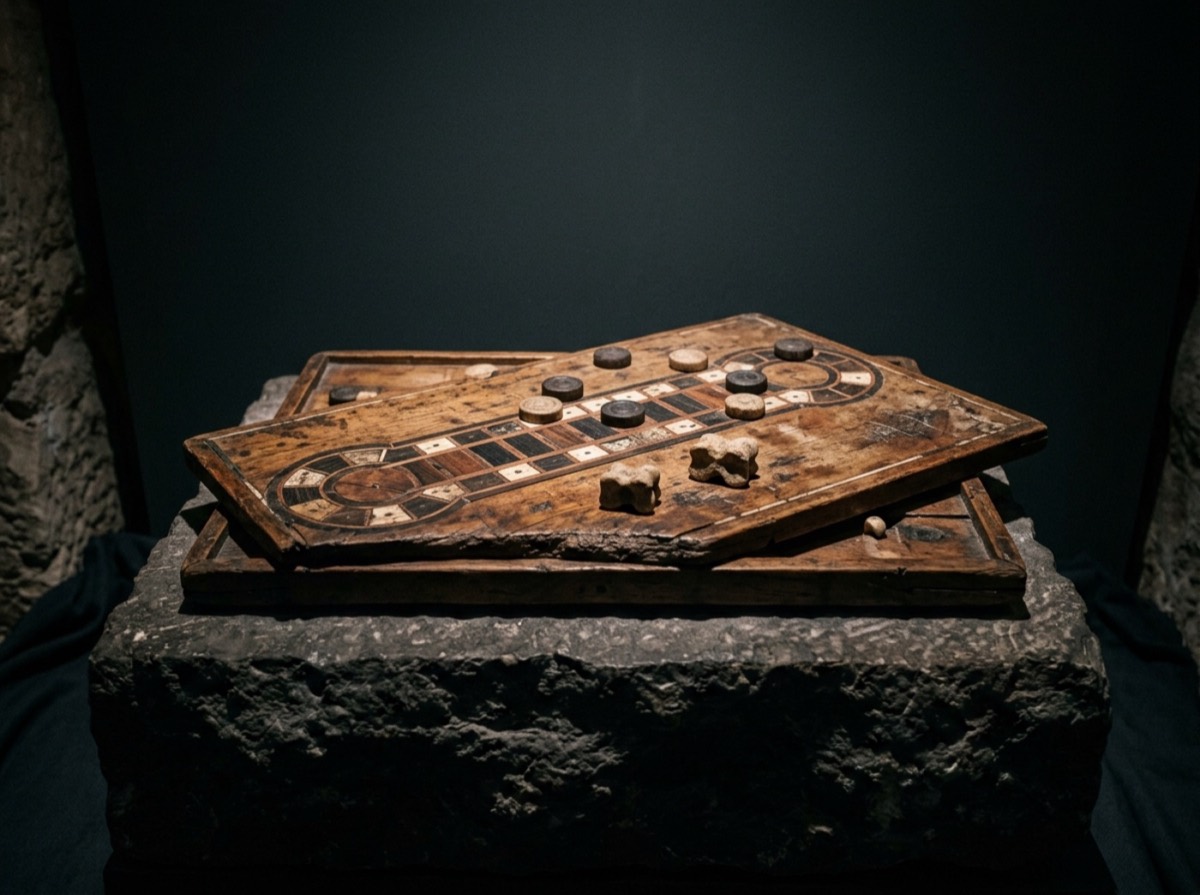
Senet is one of the oldest known board games. Possible fragments date to around 3100 BC, and clear depictions appear in Egyptian tombs from the Old Kingdom. The board had three rows of ten squares, and players raced pieces along them using throwing sticks. Over time Senet took on religious meaning and became linked with the journey of the soul through the afterlife; boards were placed in tombs, including that of Tutankhamun.
Mehen, another early Egyptian game, used a board shaped like a coiled snake. It was played roughly in the third millennium BC and later faded from use, so its rules remain uncertain.
Long before writing was common, people were scratching grids into stone and racing pieces across boards.
The Royal Game of Ur: the oldest playable board game
In the 1920s and early 1930s, the archaeologist Leonard Woolley excavated the Royal Cemetery at Ur in present-day Iraq and found several beautifully inlaid game boards. One held by the British Museum dates to roughly 2600 to 2400 BC.
For decades nobody knew how the game was played. Then Irving Finkel, a curator at the British Museum, studied a Babylonian clay tablet written around 177 BC that described its rules. The Game of Ur is a two-player race game using tetrahedral dice, with rosette squares that grant safety and an extra turn. Versions of it spread across the ancient world, from the Levant to Egypt and as far as Sri Lanka. Around the same era, a game board found at Shahr-i Sokhta in Iran shows how widespread such race games were.
Backgammon, mancala and other ancient games
Many race games of Mesopotamia and the Mediterranean are regarded as ancestors of backgammon, whose family of dice-and-counter games has roots about five thousand years deep. The Romans played a related game often called tabula.
Mancala, the family of sowing games in which seeds or stones are moved around rows of pits, is played across Africa, the Middle East and Asia and has a long history, though exact origins are hard to pin down because the pits were often scooped into the ground.
The origin of chess and Go
Go originated in China more than 2,500 years ago and is thought to be the oldest board game continuously played to the present. The earliest written reference appears in the Zuo Zhuan, a chronicle compiled around the fourth century BC. Go spread to Korea and Japan and remains hugely popular in East Asia. In 2016 it made headlines when a computer program defeated top professional Lee Sedol.
Chess traces its recorded history to chaturanga, a game played in India around the seventh century AD. It moved to Persia as shatranj, spread through the Islamic world and reached Europe via Spain and Italy. The modern rules, including the powerful queen, took shape in Europe at the end of the fifteenth century, and the rules were standardised during the nineteenth century.
The industrial age: board games go mass market
Printing and cheaper manufacturing turned board games into household products in the nineteenth century. Early commercial titles, such as The Mansion of Happiness published in the United States in 1843, often carried moral lessons, rewarding virtue and punishing vice.
Between roughly the 1880s and the 1920s, mass production made games affordable, and many publishing houses grew up around them. One of the century's most famous games began as a teaching tool: Elizabeth Magie patented The Landlord's Game in 1904 to show the problems of land monopolies. Versions of it circulated for years, and in 1935 Parker Brothers began selling Monopoly, which became one of the best-selling board games in history. Scrabble followed in 1948, and family games became a fixture of post-war homes.
Eurogames and the modern board game renaissance
Germany played a central role in the next chapter. The Spiel des Jahres award, founded in 1978, gave its first prize in 1979 and helped build a strong market for family-friendly strategy games. These German-style games, later called eurogames, favour clear rules, limited luck, no player elimination and indirect competition over trading and building.
The Settlers of Catan, published in 1995, is widely credited with carrying that style beyond Europe. Titles like Carcassonne and Ticket to Ride followed, and from the 2000s onward a board game renaissance took hold: specialist shops, board game cafés, large conventions such as the annual fair in Essen and crowdfunding campaigns that raised huge sums for new designs. Today's hobby spans cooperative games, legacy games that change permanently as you play, and quick party games, all building on ideas that are thousands of years old.
Frequently asked questions
What is the oldest board game in the world?
+
Senet from ancient Egypt is among the oldest known, with possible fragments from around 3100 BC. The Royal Game of Ur, from about 2600 to 2400 BC, is often called the oldest playable board game because its rules survive on a Babylonian tablet.
What is the oldest board game still played today?
+
Go is generally considered the oldest board game played continuously to the present. It originated in China more than 2,500 years ago and has millions of players worldwide.
Where did chess come from?
+
Chess developed from chaturanga, played in India around the seventh century AD. It spread to Persia as shatranj, then through the Islamic world to Europe, where the modern rules emerged in the late fifteenth century.
Who really invented Monopoly?
+
Monopoly grew out of The Landlord's Game, patented by Elizabeth Magie in 1904 to criticise land monopolies. Parker Brothers released Monopoly in 1935, based on a later version sold to them by Charles Darrow, and also bought Magie's patent.
What is a eurogame?
+
A eurogame, or German-style board game, emphasises strategy, economic choices and indirect interaction, with limited luck and no player elimination. The Settlers of Catan is the best-known example.
Why did board games become popular again?
+
Better game design, the influence of German-style games, specialist shops and cafés, online communities, and crowdfunding all fuelled a revival from the late 1990s onward. Many people also value board games as a social, screen-free activity.
The history of board games shows a remarkable continuity: people have raced pieces, captured territory and tested their luck for thousands of years. From Senet and the Royal Game of Ur to chess, Go, Monopoly and modern eurogames, each era has added new ideas to a very old habit. The next time you set up a game night, you are joining one of the longest traditions in human culture.
How we research: Guides are written from established sources and checked for accuracy. They are general information, not professional advice.
Written by
Bitezine Editorial Team
Rankings, reviews & guides
Our editors research every piece from makers’ documentation, independent tests and owner reports, and update it when products change.